Is Your Product Losing Users for the Wrong Reasons?
Most companies don’t think about hiring a UX consultancy until the cracks start to show. Conversions drop. Users complain. Support tickets pile up. It’s easy to blame features or marketing. But often, the root cause is much simpler: your product isn’t usable.
That’s where a UX consultancy comes in not to redesign everything from scratch, but to realign your product with real user needs. In 2025, where experience is the differentiator, UX isn’t just a design concern it’s a strategic business priority.
Are You Losing Users Because of Bad UX?
If your product looks great but still struggles with user engagement, conversions, or retention, the issue likely isn’t your feature set it’s your user experience (UX).
Most companies don’t consider hiring a UX consultancy until things start falling apart:
- Conversion rates are dropping
- Users are frustrated but silent
- Support tickets keep growing
- Your design team is stuck in a loop of cosmetic changes

At this point, it’s tempting to blame your marketing or development. But more often than not, the problem is simpler: your product isn’t aligned with real user behavior. That’s where a UX consultancy steps in not to redesign everything but to help your product work smarter, smoother, and more intuitively for your users.
What Is a UX Consultancy?
A UX consultancy is a team of external experts who specialize in evaluating and improving how users interact with digital products. Unlike in-house designers who are often embedded in day-to-day delivery, UX consultants bring fresh perspective, objective analysis, and research-backed strategies.
Think of them as product surgeons: they don’t rebuild your app from scratch, they diagnose what’s broken and prescribe targeted UX improvements based on user behavior, heuristics, and business context.
What Do UX Consultants Actually Do?
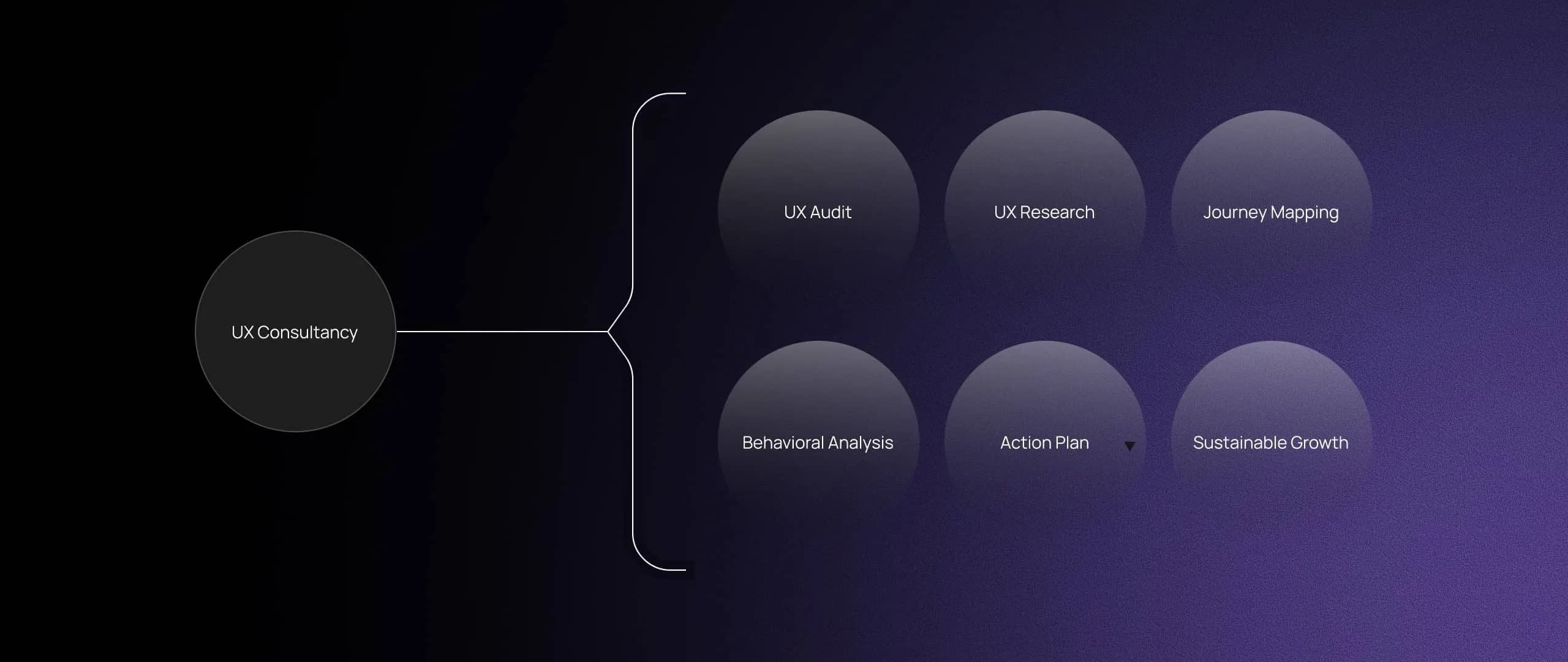
While specific services vary, a typical UX consultancy engagement includes:
- UX Audit: A comprehensive evaluation of your product’s usability, accessibility, and user flow often using frameworks like Nielsen’s heuristics.
- User Research: Interviews, surveys, session recordings, and behavior analytics to uncover usability friction.
- Journey Mapping: Visual mapping of how users navigate your product—and where they drop off.
- Behavior Analysis: Identifying patterns from tools like Hotjar, FullStory, or Google Analytics to understand real user pain points.
- Action Plan: A prioritized roadmap of improvements, with a focus on business ROI and feasibility.
These efforts help shift teams from guesswork to data-driven UX strategy.

Why You Should Care: The ROI of UX Consulting
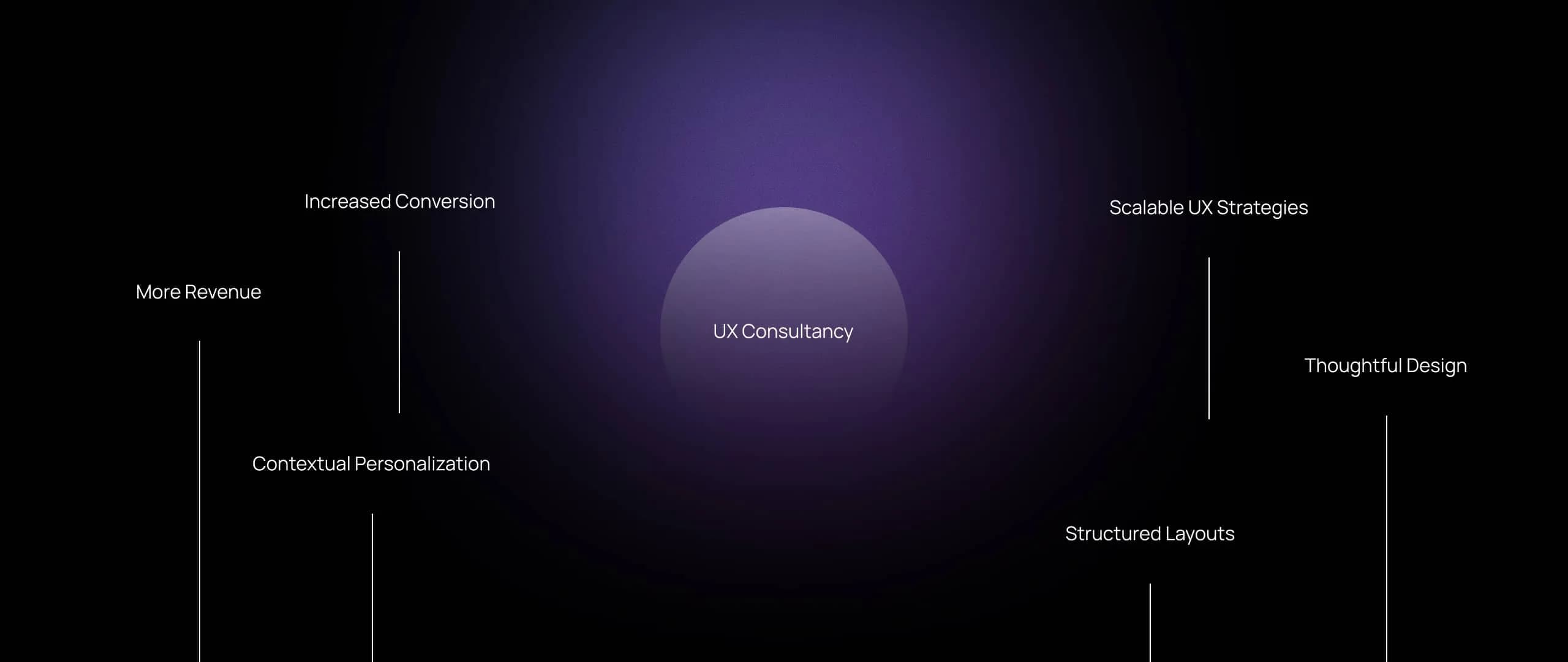
Let’s be clear UX isn’t a “nice-to-have.” It’s directly tied to performance metrics like revenue, retention, and customer satisfaction.
Here’s how working with a UX consultancy can pay off:
- Higher conversions: Improved usability can increase conversion rates by up to 400% (Forrester Research)
- Reduced churn: When users understand your product and enjoy using it, they stay longer.
- Shorter development cycles: Real user insights help teams avoid wasting dev sprints on flawed assumptions.
- Fewer support requests: Clearer interfaces mean fewer “How do I?” tickets.
- Sustainable growth: Products like Notion, Duolingo, and Airbnb thrive because of user-centered design, not just feature sets.
“88% of users are less likely to return after a bad experience.” Google Research

When Should You Hire a UX Consultancy?
Hiring a UX consultancy isn’t just for when things go wrong it’s a strategic move that can help you prevent costly mistakes, accelerate growth, and unlock hidden user insights.
Here are some clear signs it might be time:
- Your product has launched, but user adoption is slow or flat:
You’re getting traffic, but engagement or retention isn’t where it should be.
- You’re trying to improve onboarding or reduce churn:
A streamlined UX can significantly improve time-to-value and long-term retention.
- Users are struggling with the interface:
Feedback suggests your product feels confusing, unintuitive, or “clunky.”
- You’re planning a redesign and want to avoid repeating past mistakes:
A consultancy can identify root causes and guide a smarter UX strategy.
UX Consultancy vs. UX Design: What's the Difference?
It’s easy to confuse UX design with UX consulting, but they serve different (and complementary) purposes:

You can’t build great UX if you don’t know what’s broken. That’s why many smart product teams start with consulting before jumping into redesign mode.
How UX Consulting Works: A Step-by-Step Guide
1. Discovery & Alignment
The engagement starts with understanding your product’s business model, target users, market context, and stakeholder goals.
Consultants often begin by:
- Conducting stakeholder interviews to understand internal expectations, pain points, and existing assumptions.
- Reviewing product documentation, analytics, roadmaps, or customer feedback archives.
- Running competitive UX benchmarking to assess how your product stacks up against others in your industry.
This stage ensures alignment on objectives, timelines, and KPIs, forming the strategic foundation for the entire engagement.
2. UX Audit
The UX audit is a comprehensive evaluation of your product’s interface and user experience using both expert reviews and data.
Consultants assess:
- Usability heuristics (like consistency, feedback, and error prevention)
- Navigation clarity and content structure
- Visual hierarchy, responsiveness, and accessibility compliance (WCAG standards)
- Conversion path bottlenecks and form usability
They may also conduct a heuristic walkthrough, where each key user task (e.g. sign-up, checkout, onboarding) is evaluated for friction.
The goal is to provide a clear snapshot of what’s working, what’s confusing, and what’s costing you users.
3. User Research
No assumptions, just insights. Consultants collect qualitative and quantitative feedback directly from real users to understand how your product performs in real-life scenarios.
Typical methods include:
- User interviews to explore motivations, expectations, and frustrations
- Surveys for broader sentiment analysis
- Session recordings and heatmaps to see where users click, scroll, and abandon
- User personas development to capture patterns in needs and behaviors
This research fills the gap between what your team thinks is happening and what actually happens during user interaction.
4. Journey Mapping
User journey mapping visualizes the entire experience from the user’s point of view—across all touchpoints and channels.
Consultants map:
- Entry points (e.g. landing page, app store, referral link)
- Steps taken across the product (navigation paths, clicks, scrolls)
- Pain points like drop-offs, delays, or unclear next actions
- Emotions and questions users may have during key flows
This process highlights where users get stuck or drop off, offering a clearer picture of how to streamline and improve the overall journey.
- Prioritized Action Plan
After gathering audit findings and user research, the consultancy delivers a UX roadmap a strategic blueprint that prioritizes improvements.
This plan may include:
- UI/UX design mockups or wireframe suggestions
- Content changes for clarity or tone
- Feature simplification ideas
- New onboarding or micro-interaction flows
The roadmap is built to be actionable, allowing your product team to tackle fixes in sprints without disrupting long-term goals.
- Implementation Support
A great UX plan is useless unless executed. That’s why many UX consultancies stay on to support your in-house designers, developers, and product managers during implementation.
They may:
- Collaborate on design sprints
- Review wireframes and prototypes
- Provide design system recommendations
- Help establish internal UX documentation or guidelines
- Validate that changes reflect the original research findings
This collaborative phase ensures the intended experience is preserved through development and that no insight is lost in translation.
7. Usability Testing & Iteration
Once improvements are implemented, consultants help measure their effectiveness through structured usability testing.
This can include:
- Moderated or unmoderated usability tests with real users performing tasks
- A/B testing of new versus old flows to measure performance
- Post-launch analytics reviews to monitor engagement, retention, and drop-off
- Ongoing feedback loops using tools like Intercom or in-app surveys
UX work is never truly “done” iteration is key. This final step helps teams refine changes and adopt a culture of continuous UX improvement.
What’s the difference between UX design and UX consulting?
UX design creates the wireframes, prototypes, and UIs. UX consulting identifies the underlying problems through user research, auditing, and strategy.
Is hiring a UX consultancy expensive?
Compared to the cost of redesigning a failed product or losing customers to poor usability it’s a smart investment. Many firms offer fixed-scope audits or workshops to start.
Do I need a consultancy if I already have a UX team?
Yes, internal teams often suffer from tunnel vision. Consultants bring external clarity, diverse experience, and research depth to complement your in-house efforts.
How long does a UX consulting engagement take?
Anywhere from a one-week audit to a 3–6 month strategic engagement, depending on product complexity and scope.
What kind of results can I expect from UX consulting?
Improved user satisfaction, higher conversion rates, reduced churn, and fewer support tickets are common outcomes. A good consultancy ties UX improvements directly to business KPIs.
Can UX consultants help with mobile or SaaS products specifically?
Absolutely. UX consultancies often specialize in mobile-first design, SaaS onboarding, and optimizing complex user flows unique to these platforms.