















Reality
Most AI MVPs fail because they built five capabilities instead of nailing one.
After design discovery, most AI-native teams have clarity on users, problems, and use cases. What they don’t have, a framework for choosing which AI capability to build first.
The instinct is to demonstrate everything the model can do. The research says the opposite. 65–75% of AI MVPs fail to progress beyond early validation, and the most common reason is building too many AI capabilities at once. Traditional prioritisation methods like RICE, MoSCoW, and stack ranking weren’t designed for AI products, they ignore model constraints and the gap between capability.
Users expect the AI to do the right thing, not just the next thing.
Users expect prioritisation to feel invisible, not effortful.
Users expect the product to earn trust before asking for more.
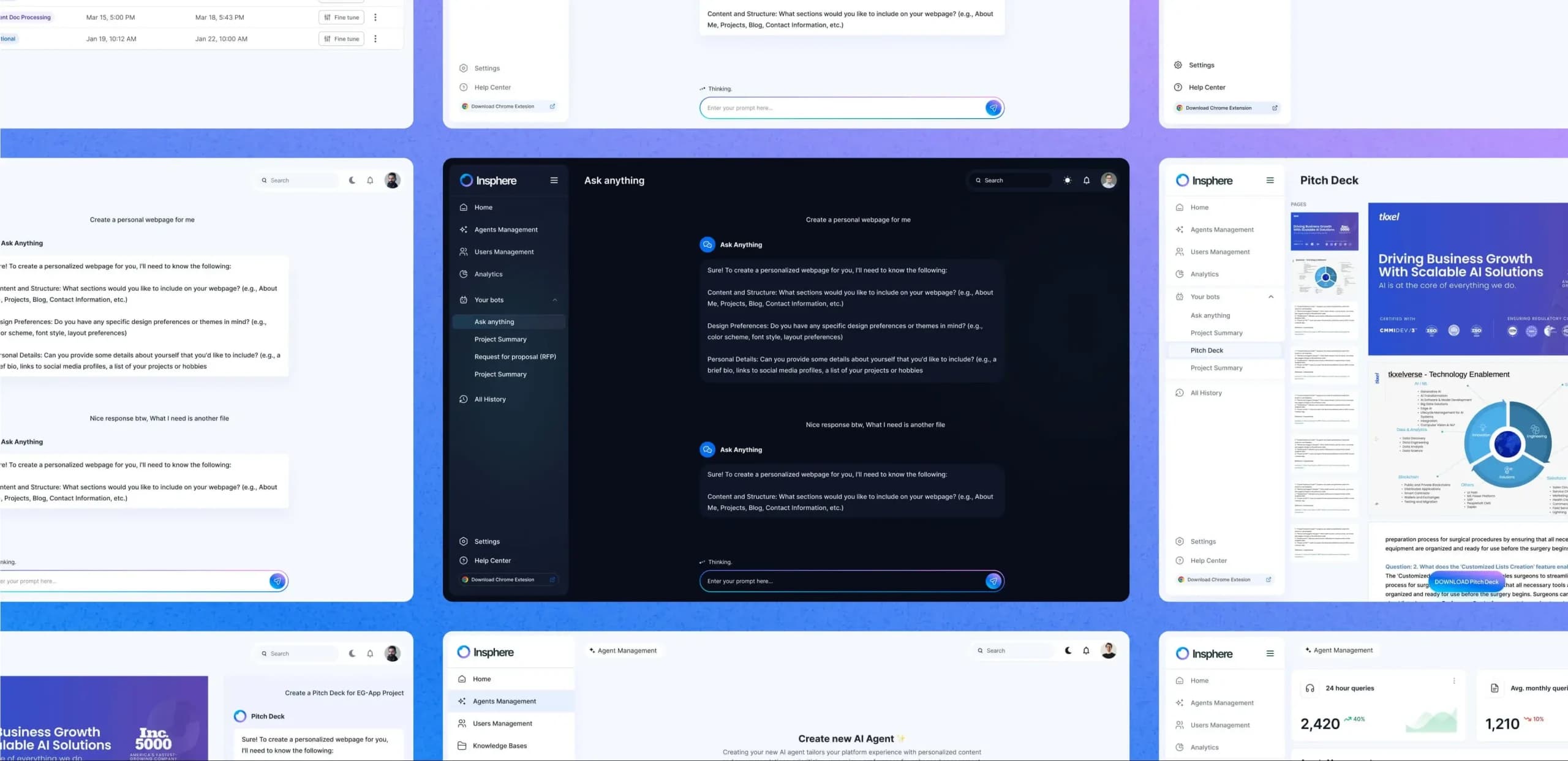
AI products across industries.
Transforming how content marketers use GenAI in their day-to-day.
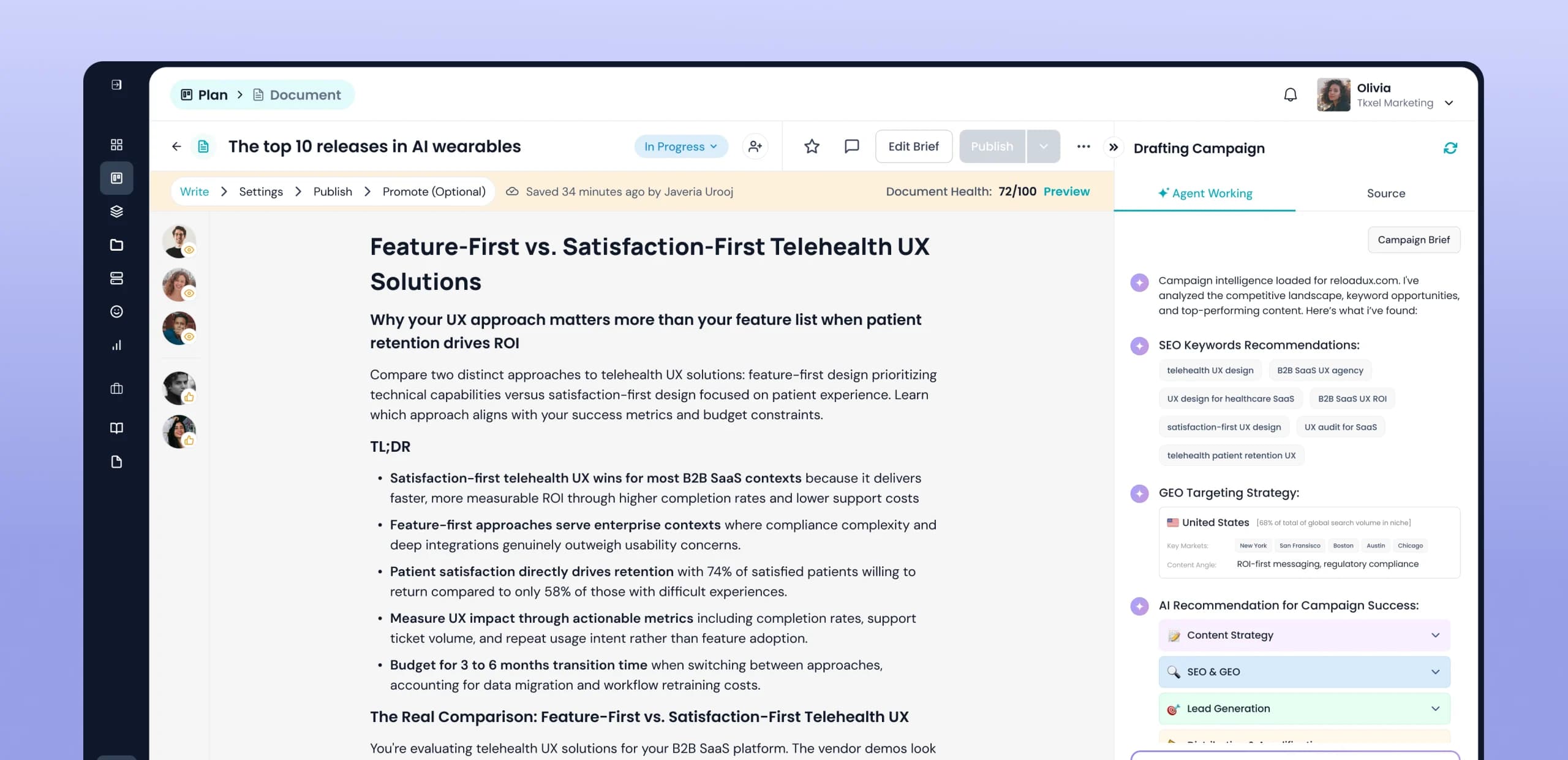
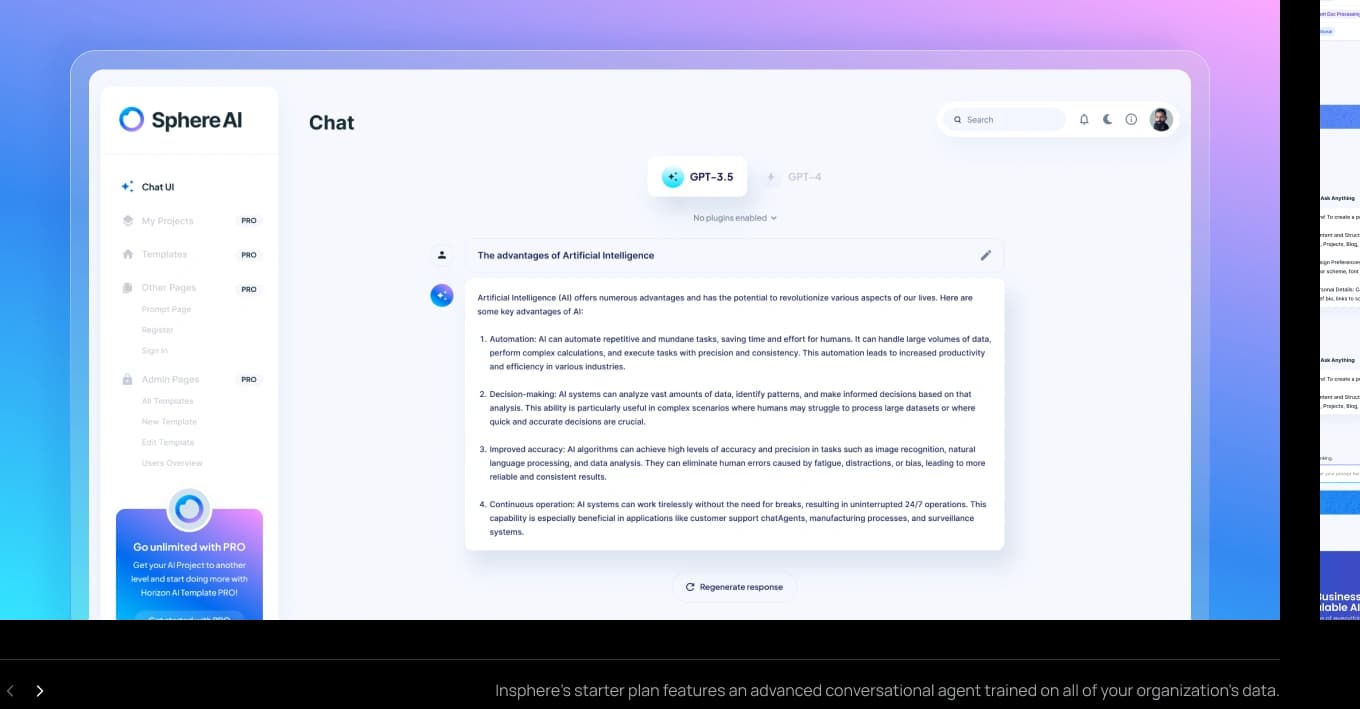
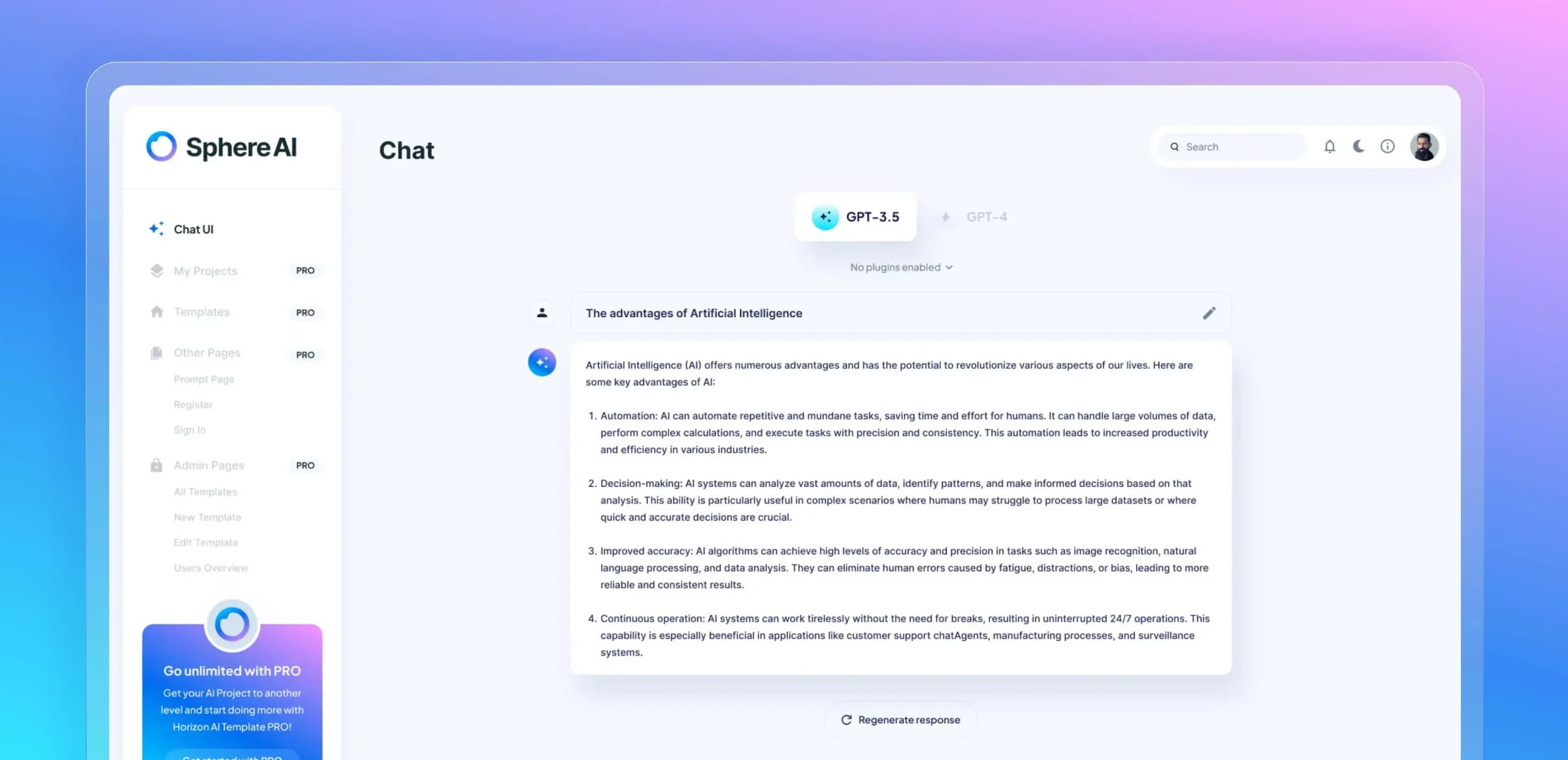
Supercharging corporate potential with unified knowledge bases.

Our Craft
Every use case scored on four dimensions. No gut feel. No loudest voice wins.
Use Case Impact & Desirability
Which use cases solve a real problem users care about? We score each on user needs and the gap between today and what AI makes possible.
AI Role Definition
For each use case, what does the AI do, and what does the user do? Not every task should be automated. We define the boundary, use case by use case.
Model-to-Experience Mapping
What the model can do vs. what the experience should promise. This gap is where trust breaks. We map capabilities and failure modes against what the user will actually see.
MVP Scope Definition
Which use cases, which capabilities, which quality bar define v1? We draw the line, what ships, what waits, what gets cut. Every decision is documented and defensible.
Not sure which AI capability to build first?
Start with a conversation. We’ll tell you within 24 hours whether use case prioritisation is the right next step.

Our Process
Inside the two weeks.
We take every use case from discovery, and any the team has added since, and score them across impact, data readiness, model feasibility, trust complexity, and delivery effort. No gut feel. No loudest-voice-wins.
For the top-ranked use cases, we define the division of work: what the AI does, what the user does, where the handoffs happen. This is the delegation model that feeds directly into design.
We work with your technical team to map what the model can actually deliver, confidence levels, failure modes, latency, against what the experience needs to feel like. Where there’s a gap, we flag it before it becomes a trust problem in production
We define the MVP scope: which use cases ship first, which AI capabilities they include, and what quality bar they need to meet. Every cut is documented with reasoning your team and investors can stand behind.
Deliverables
A scored roadmap, a clear MVP scope, and reasoning your investors can stand behind.
Prioritised use case matrix
Every use case scored on impact, feasibility, data readiness, and trust complexity
AI role maps
What the AI does vs. what the user does, per use case
Model-to-experience mapping
Where the model’s capability meets the experience promise, and where it doesn’t
Build-order roadmap
Sequenced for maximum learning with minimum risk
Investor-ready rationale
Defensible reasoning for every prioritisation decision
Two types of founders come to us for discovery.


AI You have a working model and a product idea. Maybe you’ve already built something. But the experience isn’t there yet — it lacks completeness, trust, or taste. You need a UX team that understands AI products, not one that has to be taught what a language model is.


You’re under pressure to ship AI features. You know what the AI can do technically. You don’t yet know how users will interact with it, trust it, or abandon it. Discovery gives you that clarity before dev starts — not after.
If users aren’t finishing the conversation, the design needs to change.
Start with a free trial. One use case, prototyped end to end — failure states included. No commitment.
Your questions, answered.
Yes, and this is increasingly common. Many founders come to us with something already built using AI tools. Discovery in this context means evaluating what exists, identifying completeness gaps, and redesigning with taste and trust built in.
We deliver a front-end code prototype, not a Figma file. Components and design system foundations are already set up in the codebase so your dev team can build directly from it.
Yes. Understanding what your AI can and can’t do is part of how we define use cases. We work alongside your technical team to map model capabilities and design around real constraints, not assumed ones.
Two weeks, typically. We cover two to three major use cases end to end, happy paths, failure states, and AI behaviour, with an interactive prototype and direction for the full product at the end.
Discovery feeds directly into the build phase. If you’re continuing with us, your designer is already one sprint ahead of development. If you’re taking the work in-house, your dev team has everything they need to build without ambiguity.
[ Connect with us ]
Let's talk about your product.
Hate contact forms? Direct Contact!



Sahar

Key Account Manager

Lara Kazan
Business Development Executive
Next Steps

We'll respond within 24 hours.
Our UX Expert will collect project details and create a brief.
We'll prepare estimates and share a project proposal.