How is conversational AI different from traditional chatbots?
If you’ve ever tried to get a specific answer from a first-generation chatbot, you already know the answer.
First-gen bots suffered because they were:
- Scripted, not smart→ They followed pre-defined flows and crumbled outside them.
- Transactional, not relational→ They could answer FAQs but couldn’t hold a conversation.
- Impersonal→ With zero personalization, every user got the same canned replies.
According to a recent study by InformationWeek, 48% of organizations report that their traditional chatbot technology fails to accurately resolve user issues. 61% say the bot fails to understand user queries, and 43% say it can’t parse natural language properly in the first place.
As an example, many early e-commerce bots could tell you store hours or return policies, but asking, “What’s a good jacket for fall under $200?” would lead you to a dead end.
This mismatch between user expectations (“natural dialogue”) and what bots delivered (“rigid menu trees”) created a usability trap. People wanted companions. They got clunky scripts.


The rise of intelligent experiences
Today’s best conversational UX isn’t about mimicking human chat. It’s about designing intelligent experiences that feel adaptive, contextual, and helpful.
We’ve already seen this shift in customer service with agents like Zendesk AI, Intercom’s Fin, and Salesforce’s Einstein, which use LLMs to move beyond canned scripts and deliver context-aware support at scale.
Here’s how the new wave of AI-driven experiences is reshaping product design:
- Multi-turn conversations: Products can now remember context across steps. That means if a user asks about “meeting room availability,” the system can immediately follow up with “Would you like to book Room B for 3 pm?”
- Cross-modal interactions: Users expect fluidity across text, voice, and visuals. An AI companion in a design tool might summarize user feedback in text, generate mockups visually, and then read out next steps in voice.
- Personalization that grows: Instead of canned responses, AI learns user preferences and tailors suggestions over time. This transforms products from static tools into dynamic companions.

Case study: How reloadux built an AI booking assistant for a wellness clinic
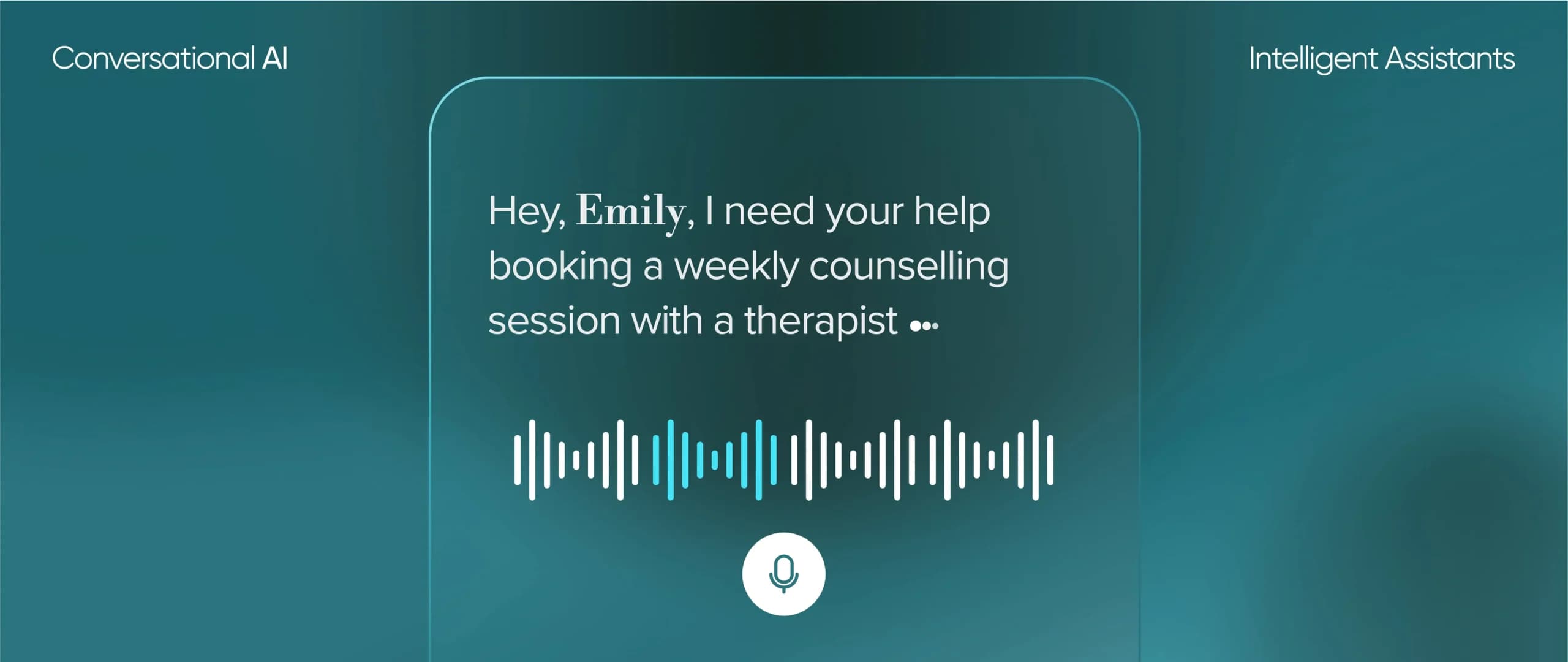
Recently, our UX team helped a wellness clinic design an AI booking assistant called Emily that makes finding care feel simple and human.
Instead of long forms, Emily chats with visitors in plain, empathetic language. It asks about basics like:
- Age
- Type of care needed
- Condition (if they want to share)
- Insurance provider (to check for discounts)
- Preference for in-person or virtual sessions
Patients can say as much, or as little, as they want. Emily picks up the important details automatically.
What sets this experience apart from others is the tone. Emily starts by asking what the patient would like to be called, and acknowledges the courage it takes to reach out. If something feels too sensitive, Emily reassures them they don’t need to share it.
Once it finds a good therapist match, Emily gives options:
- Book directly through the chat
- Or hand things off to a real person if that feels easier
The design of this next-gen experience successfully handled dead ends, availability checks, and confirmation, turning what was once a multi-step process into a single conversational exchange.

Where businesses can apply conversational UX
The exciting part is that conversational UX isn’t limited to customer support. Thanks to the mass adoption of LLMs, user behavior has now changed to the extent that conversational UX is rewiring workflows across entire industries.
These are the three areas we’re seeing the most traction:
1. SaaS onboarding
Instead of static tooltips or endless docs, imagine onboarding that adapts in real time:
“It looks like you’re trying to integrate Slack. Want me to guide you step by step?”
2. E-commerce discovery
Forget filter menus. Users can shop conversationally:
“Show me sustainable running shoes under $150 that ship fast.”
3. Enterprise dashboards
Executives don’t want to dig through charts. They want insights. A dashboard companion might answer:
“What happened to churn last quarter?”
Followed by:
“Would you like me to model how a 10% discount could affect renewals?”
Design principles for conversational UX
If you’re thinking about integrating conversational flows into your product, here are some principles that separate winners from gimmicks:
- Clarity over cleverness: Leave out the wit and humor for now. People want speed and clarity.
- Context awareness: Your companion should remember what’s happening in the session, and ideally across sessions too.
- Transparent failure recovery: Failure recovery is critical. Users need a quick escape route when the AI misfires (human fallback, FAQs, or clear exits).
- Trust through transparency: If your system is making recommendations, show users why. Link to sources, provide explanations, and let them double-check.
- Blend with the workflow: Don’t treat conversational UX as a bolt-on chat window. It should be part of the core product flow, not an isolated add-on.

What this means for founders and product teams
The shift from bots to companions isn’t just a UX trend anymore; it’s a strategic business opportunity.
- If you’re in SaaS → Intelligent onboarding reduces churn during the critical first 30 days.
- If you’re in e-commerce → Conversational discovery boosts conversion by reducing friction.
- If you’re in enterprise → AI-driven dashboards accelerate decision-making and increase stickiness.
In other words: done right, conversational UX is retention fuel.
Our approach at reloadux
When we work with product teams, we don’t just drop in an LLM and call it a day. We use a structured, iterative approach:
- Map user frustrations → Where do current flows feel too rigid or transactional?
- Prototype lightweight conversational flows → Start small with a critical task (onboarding, search, cart recovery).
- Design for trust → Always provide transparency and fallback options.
- Integrate with existing workflows → Don’t add friction; remove it.
- Iterate with real-world feedback → Watch how users interact, then refine.
Key takeaways
Conversational UX is no longer about gimmicky chatbots. It’s about designing intelligent companions that feel natural, context-aware, and proactive.
For founders and product teams, that means:
- Users expect conversations, not commands.
- Context and personalization are no longer “nice to haves.” They’re table stakes.
- Trust and transparency are your differentiators.
- Conversational UX is a business strategy, not a widget.
The companies that get this right will not only reduce friction, they’ll build deeper user trust and loyalty.
Why did early chatbots fail?
They relied on scripted flows that couldn’t adapt to real user intent. This mismatch frustrated users and damaged trust.
What’s changed today?
Generative AI enables multi-turn, context-aware, and personalized interactions that make products feel adaptive instead of rigid.
Where can I apply conversational UX?
SaaS onboarding, e-commerce discovery, enterprise dashboards… essentially anywhere users face complexity or friction.
What’s the biggest design risk?
Hallucinations and over-promising. Always give users transparency and fallback options.
How do I start?
Pick one high-friction workflow, prototype a conversational flow, test for trust and usability, then expand.