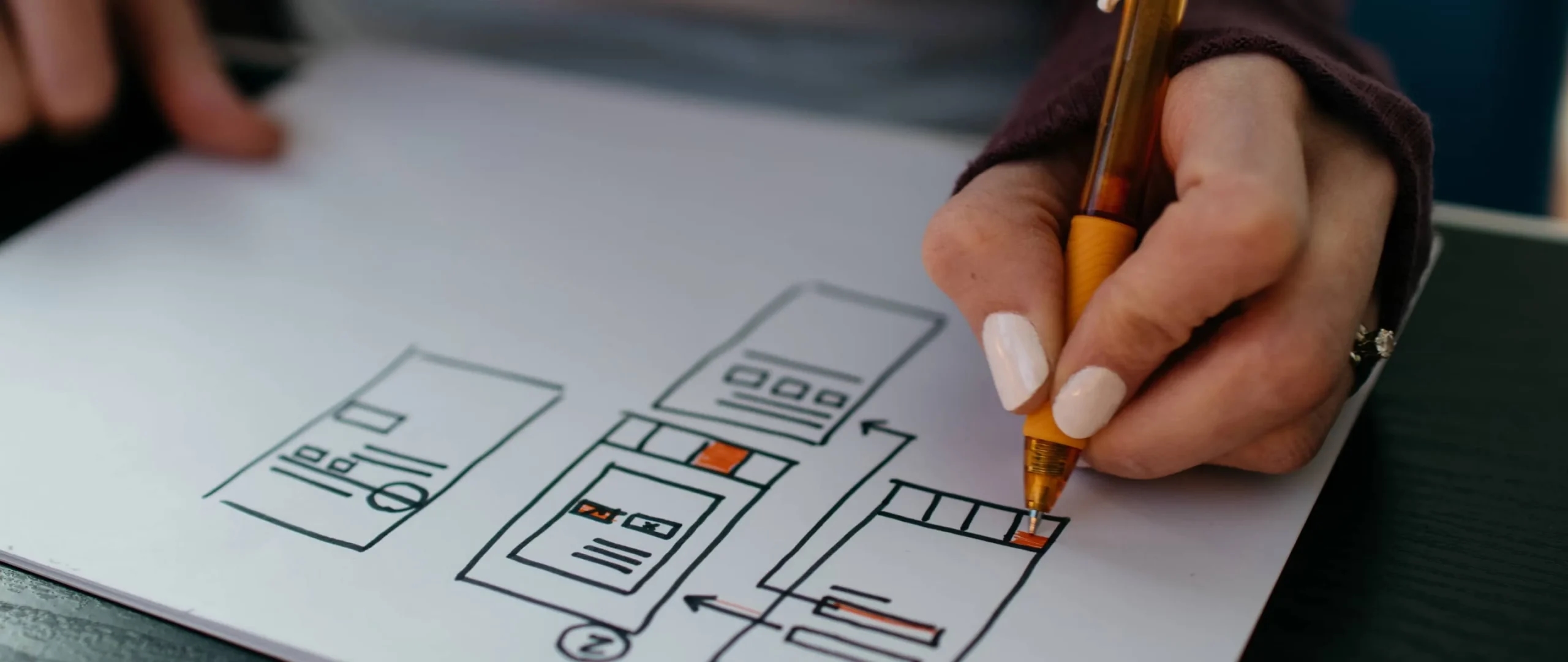
WHAT IS UX DESIGN PROCESS?
The UX design process is a systematic approach that designers follow to create products or services that are user-centered, intuitive, and effective. While the specific steps and methods can vary, the UX process typically includes the following stages:
> Discover
> Define
> Design
> Deliver
DISCOVER:
The “Discover” phase focuses on understanding the business problem or opportunity at hand. This phase basically depicts the business and end user problems. Moreover, it involves gathering information, conducting research, and gaining insights to inform subsequent design decisions for the business.
The key activities typically done during the discovery phases are user research, user interviews, market competitive analysis, empathy mapping, interaction with business stakeholder & end user interviews.

DEFINE:
The “Define” phase synthesises the information gathered to clearly articulate the problem or opportunity. This phase is crucial for establishing a focused and actionable design direction. The ‘Define’ phase involves crafting a clear problem statement, outlining goals, establishing key performance indicators (KPIs) for desired outcomes, anticipating challenges, and scope finalisation. This phase is crucial for establishing a focused and actionable design direction.

DESIGN:
The Design Phase involves translating concepts and ideas into tangible and visually appealing solutions, often building on insights gathered during a design discovery workshop. It begins with interactive (prototype-able) wireframes, refining the user journey through consecutive feedback sessions with customers.
Once the wireframes are finalized, they are transformed into a polished UI (User Interface) design, along with a defined design language for the development phase. Ongoing iteration based on feedback ensures the final design is validated, aligned with user needs, and ready for implementation with stakeholder approval.

DELIVER:
The “Deliver” phase involves design handover and delivering the final assets to the development team for implementation. This includes providing design specifications for development and prototypes, ensuring a smooth transition from design to development. The goal is to communicate the design vision effectively, guiding the development team toward bringing the envisioned user experience to life.

Goals for UX design process:
The goals for UI/UX design can vary depending on the nature of the business and its objectives. However, some common goals include:
> Revenue Growth
> Improved Conversions Rate
> Gaining User Satisfaction & Engagement
> Enhanced Usability & Accessibility
Revenue Growth:
Increasing sales and revenue is a primary objective for most businesses. The product design team can contribute to revenue growth by creating appealing, functional, and well-priced products. They can also streamline revenue-generating interfaces and user flows to increase revenue.
Improved conversion rates:
Optimizing the user interface to facilitate a smooth and effective conversion process, ultimately increases the conversion rates for key actions such as purchases, sign-ups, or inquiries.
Gaining User Satisfaction & Engagement:
User satisfaction is sought to be ensured through the provision of a positive and enjoyable experience. Engagement is being fostered by creating an engaging and immersive experience to capture and maintain users’ attention.
Enhanced Usability & Accessibility:
Designing a product that is easy to use and accessible to a diverse range of users is important. Usability is a core goal, as users should be able to accomplish tasks efficiently and without confusion. The same as accessibility is about making the product usable for everyone, regardless of their abilities or limitations.

Work With Us for Better UX
Turn your ideas into high-impact digital experiences with a team that blends strategy, design, and innovation. We work closely with you to understand your goals, uncover user needs, and craft solutions that deliver real results.
From discovery to final design, our process is collaborative, data-driven, and focused on creating products that users love. Let’s build something meaningful together—reach out today and take the first step toward a better user experience.
Conclusion:
In conclusion, the design process is a dynamic and iterative journey that evolves with each project. From understanding the problem to crafting innovative solutions and implementing them in the real world, the design process is a testament to creativity, collaboration, and user-centricity. Whether you’re a designer, developer, or stakeholder, embracing the details of the design process empowers you to create meaningful and impactful experiences.
The reloadux team has thoroughly engineered a unique design process that stands out in the industry.
Get in touch: info@reloadux.com
https://reloadux.com/

Faizan Khan
Sr. Product Designer