
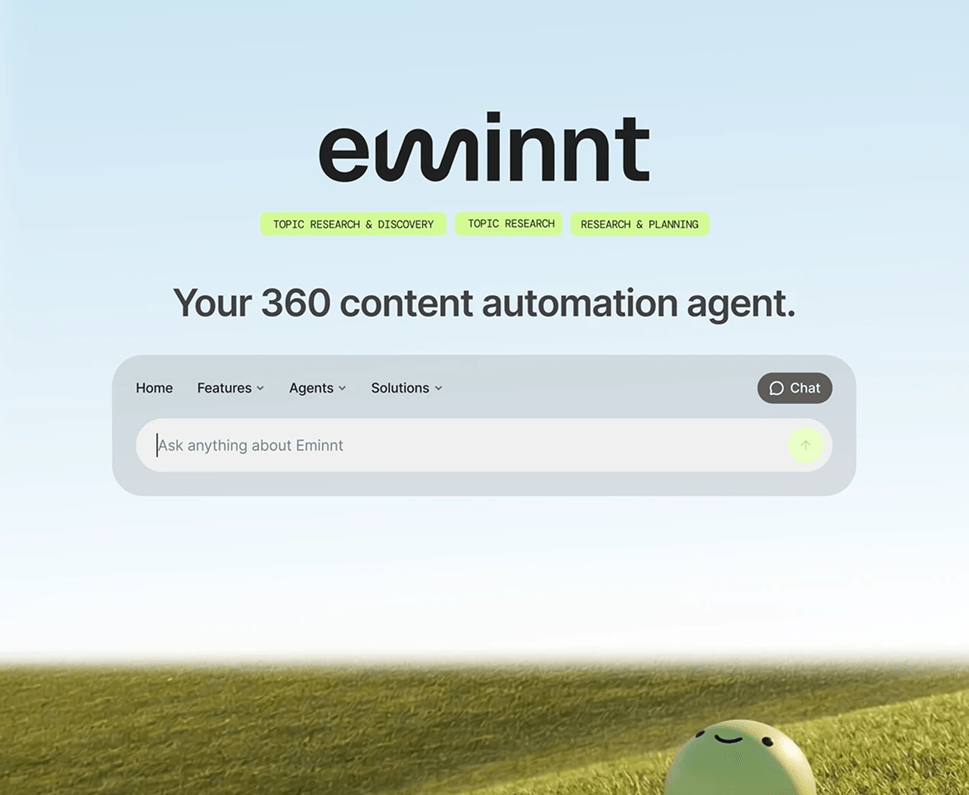















Reality
Every product looks the same. Every product feels the same.
Lovable, Bolt, Cursor, v0. Whichever tool you built with, what comes out looks and feels like everything else built the same way. Your users recognise it in seconds.
And when they do, they decide something you never intended. This was made in a hurry. There’s probably nothing underneath it. That judgment lands before anyone opens a feature, so the product you actually built never gets a fair look.
What’s missing is taste. Not decoration, the decisions. What your product is for, what you leave out, how it should feel to use. No model can make those calls for you, because a model is built to return the average. Taste is the one thing your competitors can’t generate overnight.
Your product looks like four others in your category, so people assume you’re a copy of one of them
Onboarding opens on a blank box. It reads as unfinished before anyone tries anything
The AI does something and can’t say why. That’s the exact moment trust breaks
The happy path works. Everything else dead-ends, and that’s where people decide about you
Empty, loading, and error states are framework defaults. Every one of them says nobody was here
Swap your logo for a competitor’s and the page still makes sense. Nothing on it is yours
How can we help you?
We start where trust breaks.
We go through your product and site the way your customers do, not the way you do. Where they hesitate, where they leave, where it reads as template. You get findings, prioritised, with what we’d fix first and why it’s costing you.
This is where taste comes from. Not decoration, decisions. We work out who this is for, what it’s actually for, and what to leave out. A product can only be as specific as the thinking behind it, which is why generic thinking always shows up as a generic product.
One system instead of one-off screens. Tokens, components, spacing, states, so the product stops looking like it was assembled by different people on different days. Then the flows themselves, including the onboarding that currently opens on a blank box with nothing to go on.
People don’t trust what they can’t see. We design the signals that make AI behaviour legible: where the answer came from, how certain it is, how to steer it. Then the failure states, because agents will get things wrong, and users who hit a dead end don’t come back. Human in the loop wherever it matters.
Every state covered, every edge case documented, organised so your team keeps building without losing context. A front-end code prototype, not a Figma file to interpret.
We work with two types of teams on this service.


You built the MVP yourself, fast, with AI tools. The technology works. The demo lands. But it looks like four other products in your category, people try it once and don’t come back, and you’re about to put it in front of investors or early customers who will decide in seconds.
What you need is taste added to what you already built, the product reading as a decision rather than a default, without fighting the speed that got you here. We work in weeks, not quarters, and we hand back code your team can build on.


You shipped an AI feature. It works. Almost nobody uses it. It was built by whoever had bandwidth, and nobody owns the experience end to end, so there’s no explanation of what it draws on, no way to correct it, and no reason for anyone to build a habit around it.
That’s not an adoption problem you can fix with a tooltip. We redesign the AI into the workflow where the decision actually happens, and design the trust layer that decides whether users come back.
Questions founders ask before redesigning an AI-built product
AI tools return the most likely answer: the average of everything they were trained on. Everyone building fast with the same tools lands on the same hero, the same layout, and the same onboarding. More prompting produces more variations of that average, not a point of view.
Because people recognise it, the same way they recognise an AI-written document. And once they recognise it they conclude the product was rushed and has nothing underneath, so they stop taking it seriously. That judgment lands before anyone opens a feature, which means the quality of what you actually built never gets a hearing.
Judgment, not decoration. Deciding what your product is, who it’s for, what to leave out, and how it should feel to use. It’s the opposite of the average, which is exactly why a model can’t supply it, and why it’s the one part of your product a competitor can’t generate overnight.
Engineering and experience design are different disciplines. You can build a working interface without designing trust, correction paths, or what happens when the model is wrong. Those need intentional design, and they’re expensive to retrofit after launch. AI-built interfaces ship fast. They don’t retain users.
You can, and most teams do. That’s exactly why so many products look identical right now. A model can’t decide what your product should be, and it can’t design the moment it fails.
We’re not asking you to stop. The trial is one day. A teardown is under a week. We work at the speed you already build at.
It works on the happy path. The question is what happens when the AI gets something wrong and the user has no way back. That’s where the churn is, and it’s a retention issue, not a visual preference.
You should. A senior product designer takes two to three months to hire and ramp. We can fix the immediate problem in weeks and hand your future hire a system to build on rather than a mess to untangle.
A working front-end code prototype. Design system specifications. Dev notes. Every state covered: empty, loading, error, success. Ready for engineering to build from directly, not a Figma file to interpret.
A cleanup sprint runs three to five weeks depending on how much of the product is in scope. A website rebuild runs two to four weeks. We scope it properly on the discovery call.
Connect with us
Let’s talk about your product.
Hate contact forms? Direct contact!