















What We’re Seeing
Not having a design system comes with hidden costs.
Inconsistency builds slowly. Designers recreate patterns, developers rebuild components, and new team members work without clear guidance. As the product grows, handoffs slow down, design debt increases, and the experience starts to feel fragmented.
It’s more than a visual issue. A scalable design system gives teams one shared foundation for building faster, collaborating better, and keeping the product consistent as it evolves.
Portfolio: Profit Optics · OCC Design System · Signal · Nitro · Vocable · Pendulum · Skyline
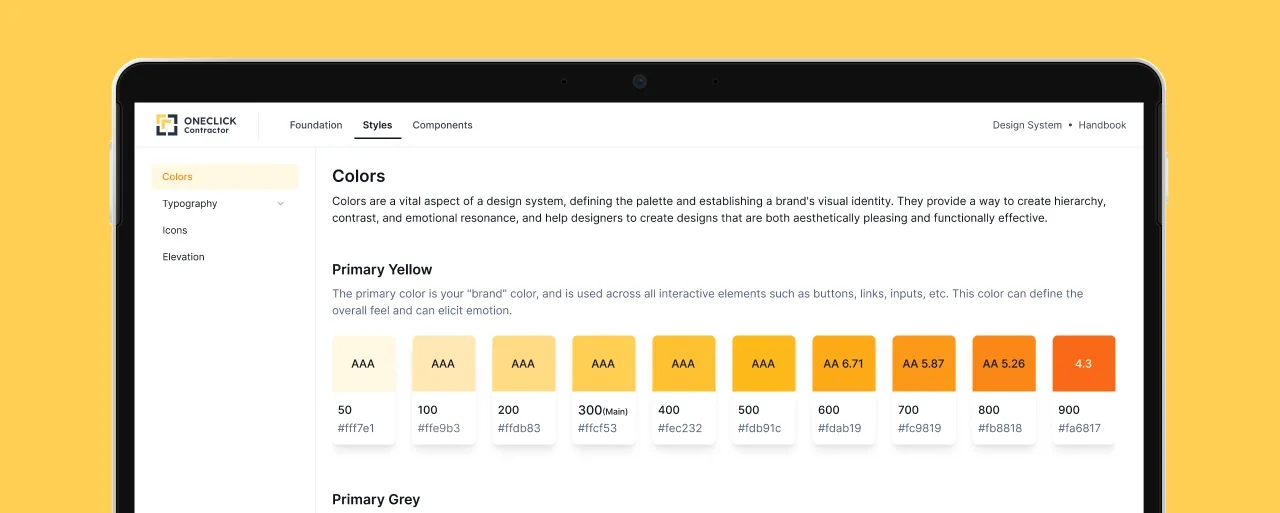
Click Design System

Created in figma, defined on storybook; implemented on live product
Design System Repository
Research tells 50% to 70% reduction in design and development time by utilizing a design system

The Voice by www.vocable.ai

Nitro by www.nitroleague.com

Click by www.oneclickcontractor.com
Request to view
Signal Design System by www.teamsignal.com
Request to view
Pendulum Design System for www.pendulumintel.com
Request to view
Skyline design system www.reiblackbook.com
Request to view
www.taxbackinternational.com
Request to view







AND 100+ MORE..
What We Buid
The shared design foundation your product teams are missing.
Design token system
Shared foundations for color, typography, spacing, sizing, and other decisions used across the product.
Component library
Reusable interface components designed around your product, brand, workflows, and real development requirements.
Interaction patterns
Consistent patterns for navigation, forms, feedback, data displays, errors, and common product workflows.
Figma system
An organized design environment where teams can find, use, update, and contribute components efficiently.
Code integration
Design system foundations connected with your development stack to reduce gaps between design and implementation.
Documentation & governance
Clear usage guidelines, contribution rules, versioning, and ownership processes that keep the system consistent.

How we work
A practical path to a scalable design system.
The engagement begins with a detailed review of your current components, product interfaces, workflows, and team collaboration. This reveals inconsistencies, duplicated work, and gaps in contribution, ownership, and versioning.
Deliverables:
A clear action plan defines the token structure, component scope, documentation approach, governance model, and technical requirements for the system.
Deliverables:
Existing components are refined where they remain useful, while missing components, patterns, and foundations are designed around your product’s actual needs.
Deliverables:
Every component is documented with usage guidance, behavior rules, design specifications, and implementation notes so designers and developers can use the system consistently.
Deliverables:
Ongoing reviews keep the design system aligned with the live product as new features, teams, and requirements are introduced.
Deliverables:
A complete design system built around your product and teams.
Shared foundations for color, typography, spacing, sizing, and other interface decisions.
library
Flexible components built around your product, workflows, brand, and development requirements.
library
Consistent patterns for navigation, forms, feedback, errors, and recurring user journeys.
system
An organized workspace where designers can find, reuse, update, and contribute approved components.
Clear guidance that helps designers, developers, and new team members use the system correctly.
governance model
A structured process for adding components, managing versions, and retiring outdated patterns.
Two kinds of teams come to us.


Your product is growing faster than your current design process. New features ship quickly, components are created one screen at a time, and the interface starts to lose consistency as more people contribute. You need a shared system that keeps design and development aligned without slowing down product delivery.


You’re managing an established product with multiple workflows, teams, and interface patterns. Designers and developers spend too much time recreating components, resolving inconsistencies, and interpreting outdated guidelines. We create or refactor the system so teams can ship new features without adding more design debt.
Your questions, answered.
A design system is a set of reusable components, guidelines, and design principles that ensure consistency across your digital products. It helps streamline design and development, reduces costs and redundancy, and improves user experience by maintaining brand consistency across platforms. Oftentimes, it’s what separates good products from great ones.
Absolutely! We tailor design systems to align with your brand’s visual language, user needs, and development requirements. Our goal is to create a scalable, flexible system that enhances both your brand identity and product efficiency.
Of course! We make sure that the design system integrates smoothly with your existing tools, such as Figma, Sketch, or any other design software you use. We also ensure that the development team has easy access to the design system and that it integrates well with the frontend stack through design tokens, component libraries, or other frontend tools. Our goal is to make sure that both designers and developers have everything they need to work efficiently.
The timeline varies based on project scope and complexity. A foundational design system can take 6-12 weeks, while more comprehensive systems may take longer. We’ll assess your needs and provide a detailed roadmap to ensure an efficient process.
Connect with us
Let’s talk about your product.
Hate contact forms? Direct contact!