















Reality
Your users are using AI every day. Then they open your product.
They’re asking questions instead of searching. They’re expecting systems to surface the right thing without being asked. They’re using voice, chat, and AI assistants as part of how they work. And when they come back to your product, it works exactly the way it always did.
We hear the same problems across teams:
Placement Uncertainty
We don’t know where AI fits into our users’
journeys.
Idea Overload
We have too many AI ideas and no way to prioritise what actually improves the experience.
Adoption Risk
Adding AI might confuse existing users or disrupt the workflows they’ve built around the product.
Budget Pressure
Leadership wants an AI roadmap. We can’t redesign the entire product from scratch.
Execution Risk
We can’t afford to ship AI that frustrates users or drops satisfaction scores.

The New Standard
How we think about
AI-ready UX redesign
Adding AI to an existing product isn’t just about shipping a new feature. It changes how users navigate, what they expect, and how much they trust your product. Getting it right follows three principles:
We never start with AI features. We start with your product, your users, and your business goals. Only then do we identify where AI genuinely adds value.
Your users trust your product. Introducing AI carelessly breaks that trust. We design for uncertainty, clear explanations, easy overrides, and failures with clear indications.
A shipped feature that nobody uses is a failed feature. We design for adoption and stay engaged until the metrics prove it’s working.
AI products across industries.
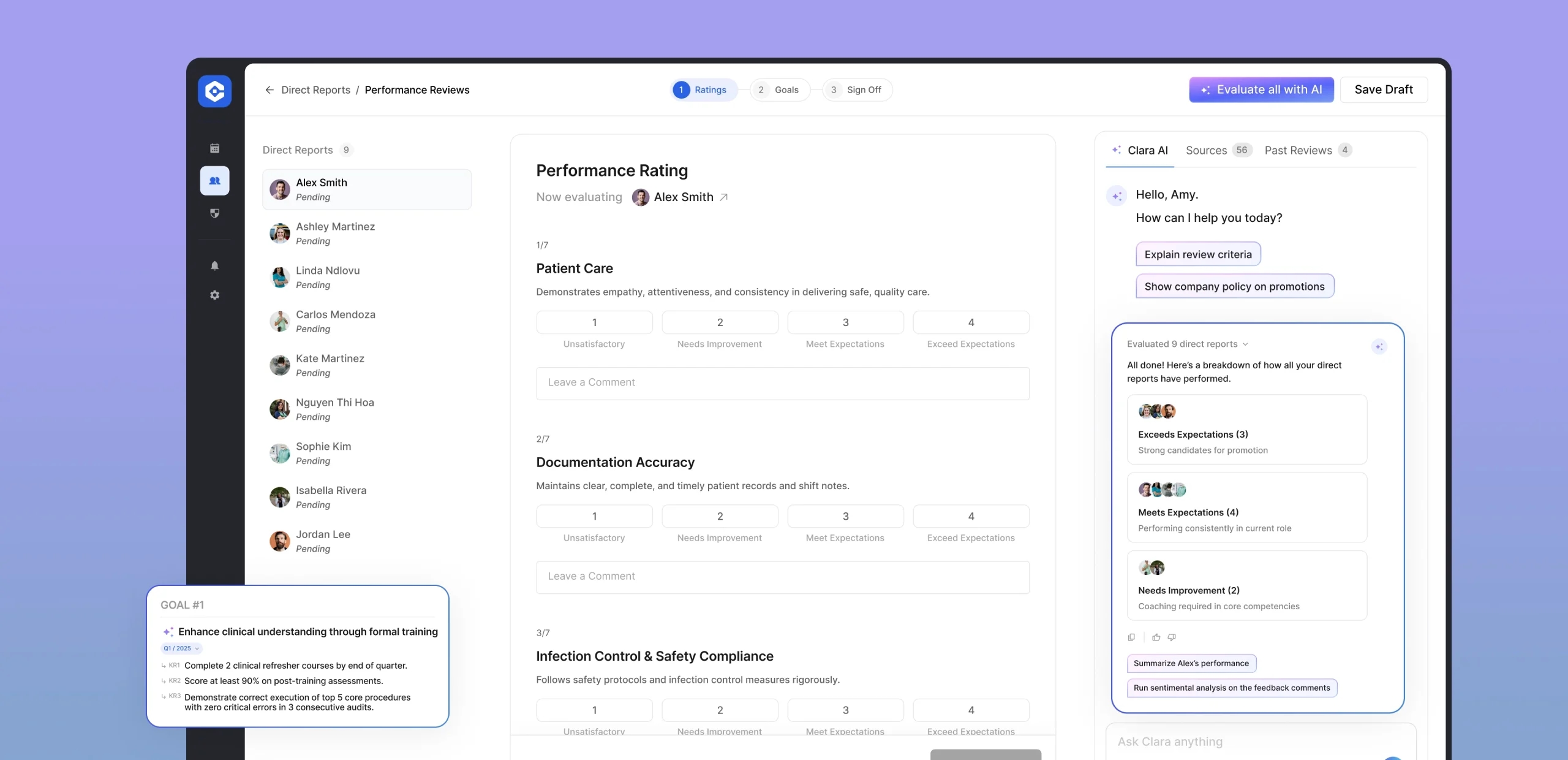
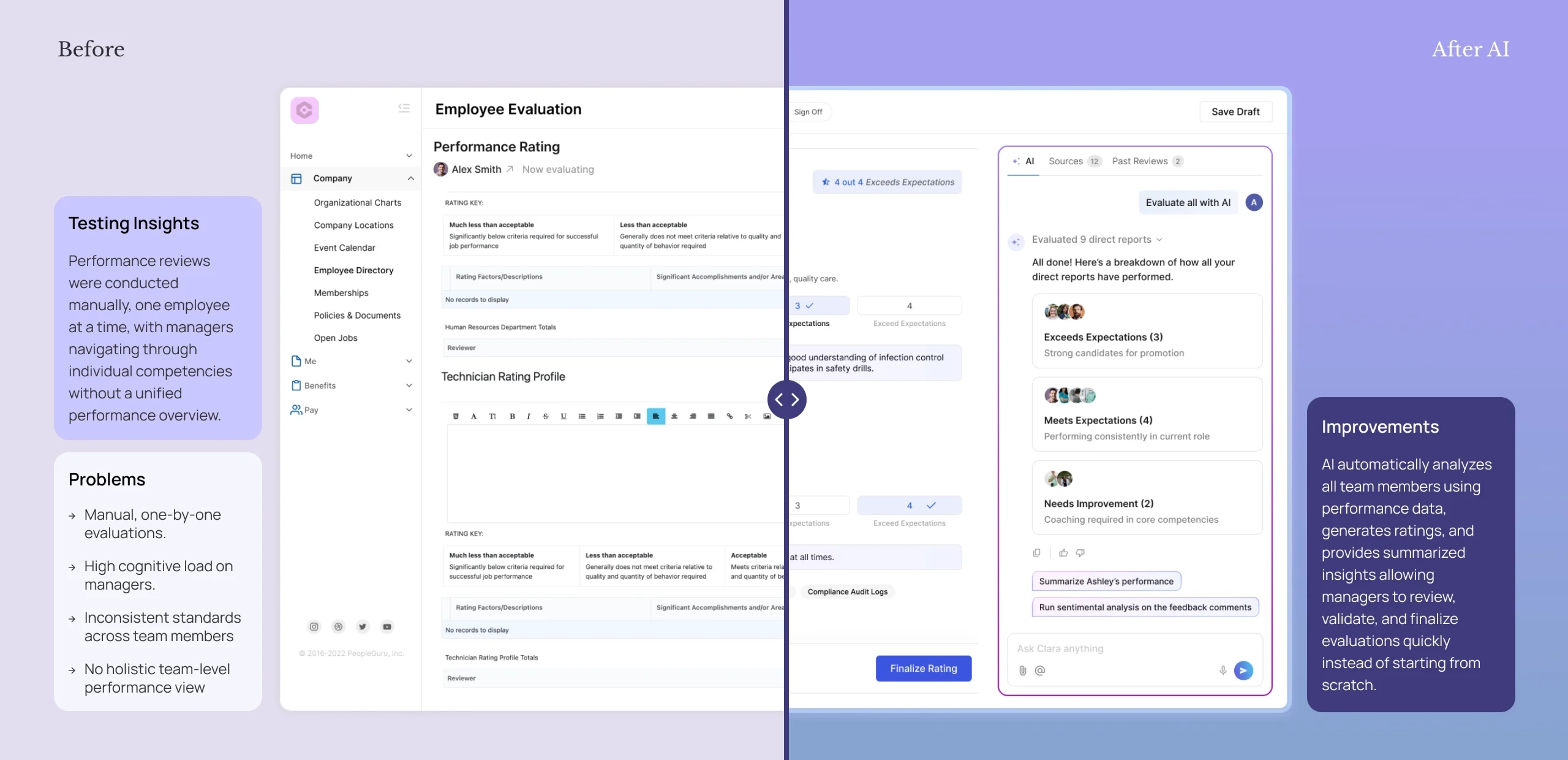
We transformed the performance review system in a legacy HRMS with an AI-native experience, where managers no longer rely on memory, but on intelligence.
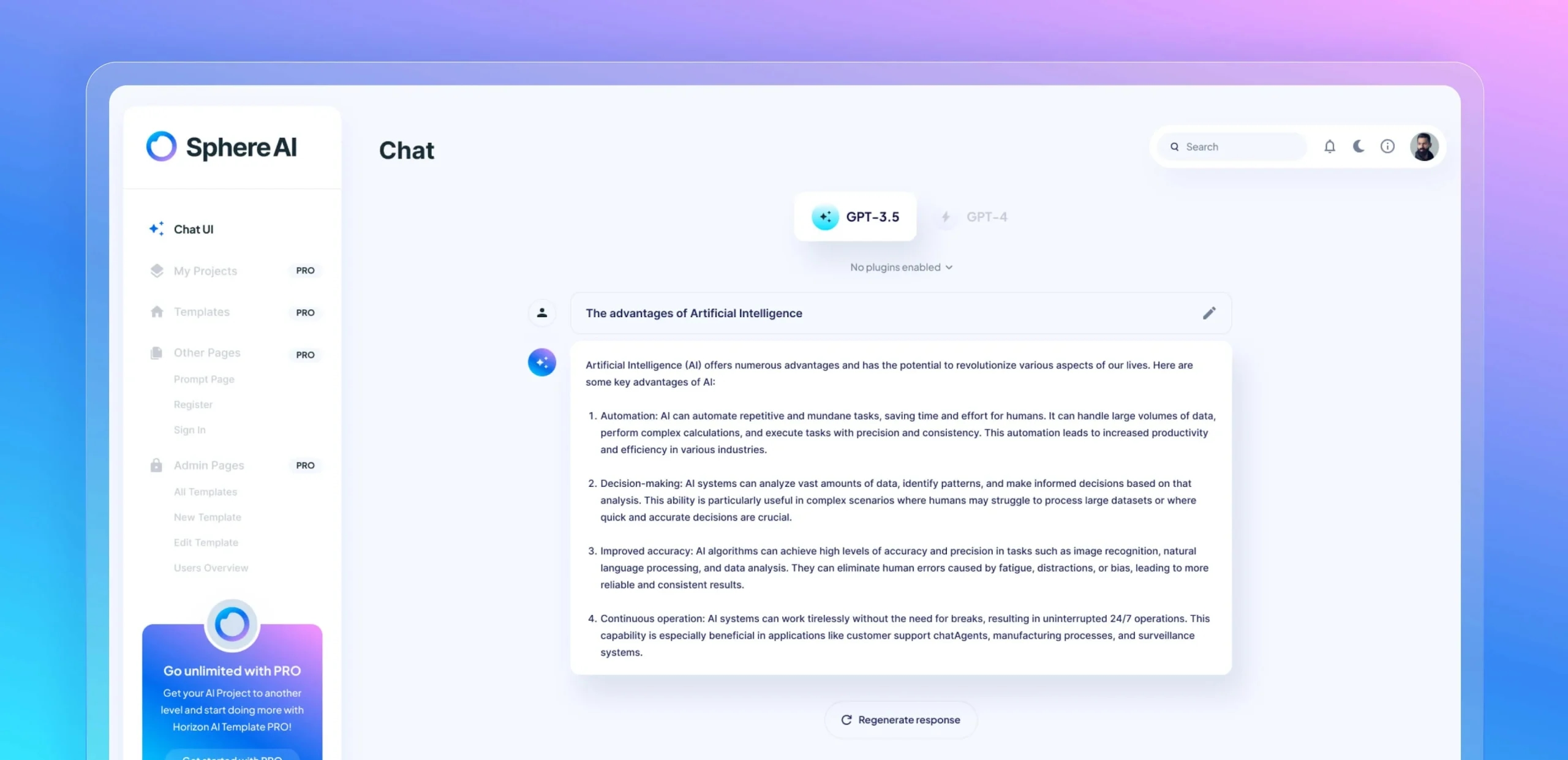
Supercharging corporate potential with unified knowledge bases.
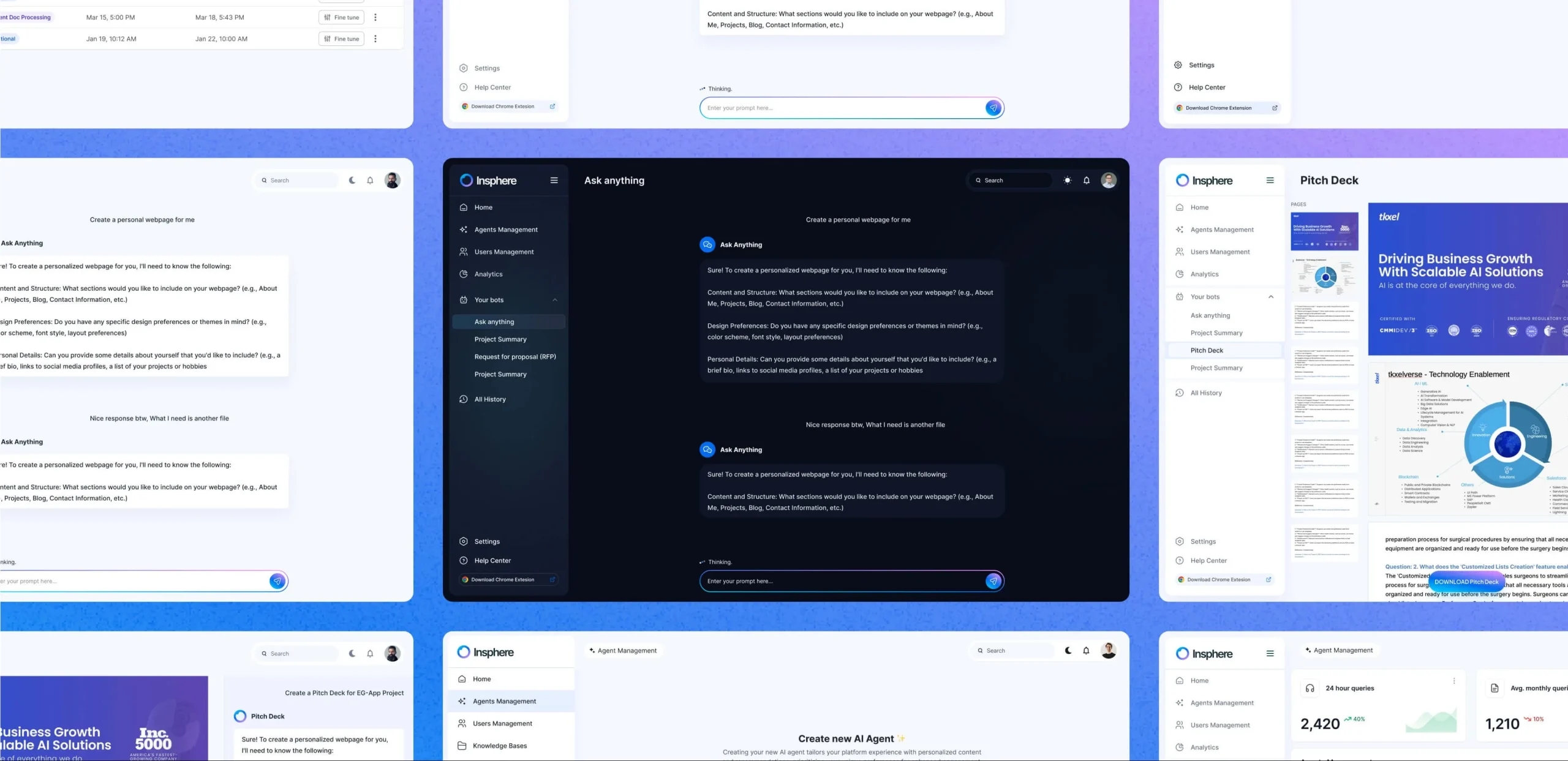
We design AI-native products using a process built for evolving products that already have users.
We start by understanding what’s actually broken, not what seems broken. We assess your product’s UX gaps, workflow friction, and AI readiness.
This step always comes first. It prevents every other mistake.
We identify where AI creates real value in your product, where it changes the experience in a way users will actually feel.
This is the step that prevents misplaced AI and feature bloat
Sometimes AI can’t sit on top of the current interface because the architecture underneath it isn’t ready. Legacy UX Modernization fixes the foundation.
We design the full AI-native experience
This is where AI capabilities become product experiences, where a model’s output turns into something a user can understand, trust, and act on.
We design every interaction, how the AI surfaces output, explains reasoning, and handles feedback.
We design the trust layer into the product, the signals, confirmations, and feedback loops that make AI behaviour legible.
This step determines whether users come back.
A redesigned experience only stays consistent if the design system supports it. We build or update the design system so every AI-native component stays consistent across every surface.
This is what makes the new experience scalable.
After launch, we design for growth. The onboarding flows and experience improvements that turn first-time users into retained ones.
We fix what most products get wrong: the first experience doesn’t show value fast enough.
We work with two types of teams on this service.


Your product has users. It might even have AI. But adoption is flat, support tickets are rising, and the experience is a step behind where your product needs to go. You can’t do a 6-month redesign, but you can’t keep shipping AI features nobody uses either.
We find the highest-leverage changes, redesign around them, and deliver something your users will actually notice.


Your team is slowing down because the tools they use every day weren’t built for how they work now. The redesign backlog keeps growing. And now there’s pressure to add AI to workflows that are already broken.
We fix the experience first, then design the AI layer that makes your team genuinely faster.
3-Day Trial
Not sure where AI fits in your product? Find out in 3 days.
We pick one core workflow from your product to run a focused UX review.
We identify where AI creates genuine value, and where it doesn’t belong yet.
We flag the structural gaps that would block AI adoption or slow your redesign.
We redesign 1–2 screens so you can see the direction before going all in.
You leave with clear priorities, a realistic path forward, and no more guessing.
Why us
Why teams choose reloadux


AI UX specialists, not generalists
Our work exclusively focuses on AI interface design. While other agencies are learning AI UX on your project, we’ve already designed 40+ AI-native products that are live in market.
B2B & SaaS experts
We design for enterprise workflows, multi-user systems, and complex data products where users are professionals who need AI that fits how they work, not one that gets in the way.
Backed by engineering reality
We’re part of the tkxel network — a 1000+ person software company, giving us direct access to engineers who build AI systems daily. Every design decision we make is grounded in what can actually ship.
Strategy before pixels
We never open Figma before we understand your users, your workflows, and where AI genuinely creates value. The audit comes first. The design follows. That order is non-negotiable.
Obsessed with adoption
A shipped feature nobody uses is a failed feature. We measure success by whether users actually engage with what we design, not by whether we delivered on time.
AI UX specialists, not generalists
Our work exclusively focuses on AI interface design. While other agencies are learning AI UX on your project, we’ve already designed 40+ AI-native products that are live in market.
B2B & SaaS experts
We design for enterprise workflows, multi-user systems, and complex data products where users are professionals who need AI that fits how they work, not one that gets in the way.
Backed by engineering reality
We’re part of the tkxel network — a 1000+ person software company, giving us direct access to engineers who build AI systems daily. Every design decision we make is grounded in what can actually ship.
Strategy before pixels
We never open Figma before we understand your users, your workflows, and where AI genuinely creates value. The audit comes first. The design follows. That order is non-negotiable.
Obsessed with adoption
A shipped feature nobody uses is a failed feature. We measure success by whether users actually engage with what we design, not by whether we delivered on time.
Investor ready? FAQs about design that secures funding
Not always. Sometimes AI can be layered onto your existing interface. Our AI readiness audit will tell you whether your current UX can support AI features or needs structural updates first.
That’s exactly what our AI opportunity assessment solves. We analyze your product, users, and competitive landscape to identify the 2-3 AI integrations that will deliver the most impact.
We design for adoption from day one. This includes progressive disclosure (introducing AI gradually), clear explanations of what the AI does, easy opt-out mechanisms, and onboarding that builds trust.
We start by looking at how your users actually work. Where do they lose time? Where do they get stuck? Then we spot the places where AI can genuinely help, like automating repetitive steps or offering smart suggestions.
Next, we weigh each idea against effort and risk, and pick the top 2–3 that will make the biggest difference. You get a clear, prioritized roadmap — not a long wishlist of “nice-to-have” features.
Yes. We extend your existing design system to include AI-specific components. If your design system needs updates to support AI, we’ll handle that too.
AI-integrated product redesign focuses on adding intelligence to products that already have users, workflows, and established interfaces. It’s about evolution, not revolution. Building AI-native products from scratch is a different process—one we also offer under our AI-native UX services.
We create production-ready designs and detailed specifications for your engineering team. We also offer implementation support to answer questions, review builds, and ensure the final product matches the design intent.
We specialize in B2B SaaS across fintech, healthcare, HR tech, project management, analytics, and enterprise software. If your product serves business users, we can help.
Connect with us
Let’s talk about your product.
Hate contact forms? Direct contact!