

The 7 Fundamental UX Design Principles
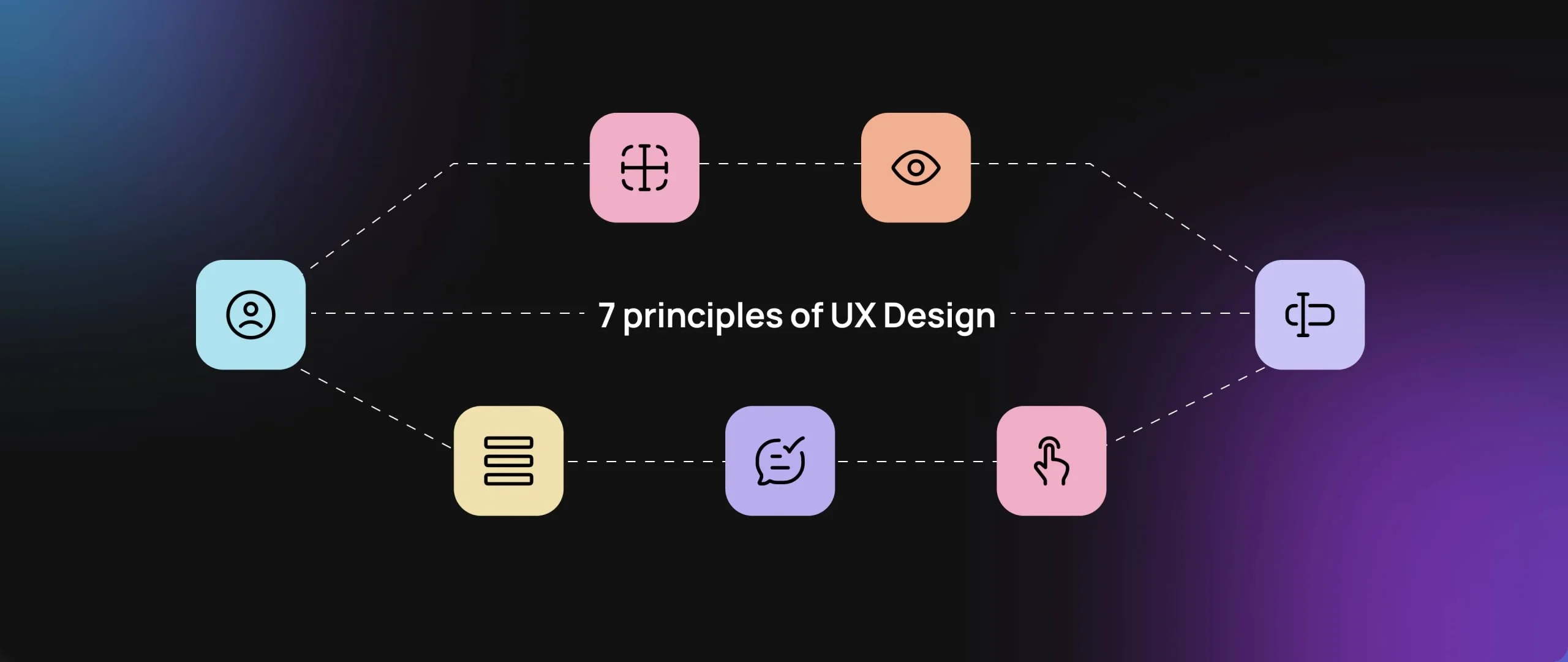
Designing the right message for every user interface is not just about being inventive; it is about orderly planning. These are the seven principles central to UX design, which dictate that all interactions should satisfy the user. Now let us take a look at what each principle is and why it is important.
- User-Centered Design
On a very basic level, UX design is about the user. User-centered design aims at facilitating the understanding of the users and the ways in which they ought to operate at discrete stages of the design process. This principle underlines the need for designers to carry out a user study and develop design personas and prototypes that are taken through actual testers to ensure that they embody the end product. - Consistency
Consistent processes create trust and decrease confusion in decision making to influence the overall result. Thus, if you keep different components, such as visuals, navigation aids, and interactions, constant with one another, that means users can easily familiarize themselves with how they can control your product. That is why consistency when it comes to designs is highly valued, for instance using buttons of the same style or using page layouts that are easy to predict. - Accessibility
Another way of stating the principle: accessibility is an almost invisible layer within any given design. Accessibility ensures your product is usable by all types of users, including those with disabilities, by outlining aspects such as color choice, keyboard controls, and compatibility with screen readers. This is especially important in digital book publishing, where content must remain readable, navigable, and inclusive across different devices and assistive technologies. It is not just the right thing to do but the socially responsible thing as a writer aiming at reaching as many people as possible. - Simplicity
In many ways, when it comes to the concept of UX, the less that is done, the more effective it is. Simplicity, without any doubt, means that one has to strip down the design and remove all the frills. Simple designs are easy to use, they do not burden the user’s memory and allow people to accomplish their tasks in a natural and predictable way. - Feedback
Information delivered within your design is termed as feedback. Be it a success message, a progress bar, or a smooth changing of the screen’s color, feedback gives a message to the users that they are being listened to. The above point is a small issue that goes a long way in making a program more easy to use and efficient. - Flexibility
Every user is different, and flexibility allows your product to adapt to those differences. This principle includes offering multiple ways to complete a task, providing customization options, or making designs responsive across devices. Flexibility ensures your product feels accessible and usable for everyone. - Usability
Usability is the backbone of good UX design. It focuses on making products easy to navigate, efficient to use, and free of unnecessary friction. A usable design ensures that users can accomplish their goals with minimal effort, creating a positive and lasting impression.

Real-Life Examples of UX Design Principles in Action
Understanding UX design principles is one thing, but seeing them in action brings their value to life. Let’s explore how some of the biggest brands apply these principles to deliver exceptional user experiences.
1- User-Centered Design: Netflix’s Personalization Engine
Netflix is a prime example of user-centered design. Every interaction on the platform is tailored to the user, from personalized recommendations to content thumbnails that align with individual preferences. By analyzing user behavior, Netflix ensures that every click feels relevant, making it simpler for viewers to discover new shows and movies. This relentless focus on the user keeps audiences engaged and returning to the platform.

2- Consistency: Google’s Material Design
Google’s Material Design system ensures consistency across its ecosystem of apps and services. Whether you’re using Gmail, Google Drive, or Google Maps, the design patterns remain familiar. Elements like typography, colors, and button styles are standardized, creating a seamless experience for users switching between apps. This consistency not only builds trust but also makes navigation intuitive.

3- Accessibility: Airbnb’s Inclusive Platform
Airbnb has set a benchmark for accessibility in digital design. Its platform includes features like high contrast modes, screen reader support, and keyboard navigation. Airbnb also provides accessibility filters for users searching for properties, ensuring inclusivity for travelers with specific needs. By embracing accessibility, Airbnb reaches a broader audience and reinforces its commitment to user diversity. Airbnb’s approach to accessibility mirrors strategies discussed in UI/UX Design Strategies for User Satisfaction, emphasizing the importance of inclusivity in user engagement.

4- Simplicity: Apple’s Clean Design Language
Apple’s commitment to simplicity reflects the core principles discussed in Optimizing Mobile App UX, where minimalism enhances usability. From the minimalist design of their hardware to the intuitive interfaces of iOS and macOS, Apple eliminates clutter to focus on what matters most. For instance, the iPhone’s home screen features only essential apps, while its settings are neatly categorized for ease of navigation. This simplicity reduces cognitive load and enhances usability.

5- Feedback: Slack’s Interactive Notifications
Slack excels at providing instant feedback to its users. For example, when you send a message, you see a checkmark confirming it’s been delivered. Its interactive notifications also keep users informed, whether it’s a new message in a channel or an alert for an integration. These small but significant feedback mechanisms ensure users feel in control of their communication.

6- Flexibility: Microsoft Office’s Customization Options
Microsoft Office demonstrates flexibility by allowing users to tailor the software to their needs. Features like customizable toolbars, templates, and language settings make it adaptable for individuals and businesses alike. Whether you’re a student drafting a paper or a company creating financial reports, Microsoft Office caters to diverse workflows.

7- Usability: Amazon’s One-Click Checkout
Amazon’s one-click checkout feature epitomizes usability. By streamlining the purchase process into a single action, Amazon reduces friction and enhances the customer experience. Users can complete their purchases without navigating multiple screens, making online shopping fast and hassle-free. This focus on usability has been a game-changer in ecommerce.

These examples show how applying UX design principles can create intuitive, inclusive, and user-friendly products. Whether you’re a startup or an established brand, integrating these principles into your design process can help you deliver experiences that stand out and resonate with your users.
Why They Matter?
- Make people happy: Intuitive, pleasant experiences leave users smiling and satisfied.
- Keep users coming back: Clear, easy-to-use interfaces boost engagement and retention.
- Help users finish things: Smooth, streamlined flows make conversions and task completion far more likely.
- Earn trust: Consistent, accessible design feels reliable and professional.
- Reduce mistakes: Thoughtful layouts and feedback cut user errors and frustration.
- Save time & support costs: Predictable UI means fewer support tickets and faster onboarding.
- Create loyal fans: A great experience turns casual users into repeat customers and advocates.
At this stage, evaluating your product’s experience through a structured review can help identify gaps and improvement opportunities. A comprehensive ux audit services and solutions with AI readiness assessment can uncover usability issues, highlight friction points, and guide data-driven design decisions.
Why Your Product Needs This
Many products fail not because of poor functionality, but because users struggle to understand or navigate them. Even with strong features, a lack of clear structure, consistency, or usability can lead to frustration, drop-offs, and low engagement. This is why evaluating user experience is no longer optional, it’s a necessity for product success.
A structured review of your product helps uncover usability gaps, friction points, and areas where users may encounter confusion or abandon tasks. By identifying these issues early, teams can make informed improvements that enhance usability, increase retention, and improve overall conversion rates.
Investing in a professional evaluation such as ux audit services and solutions enables you to move beyond assumptions and base decisions on real insights. It ensures your product aligns with user expectations, improves accessibility, and delivers a seamless experience that supports both user satisfaction and business growth.
How to Incorporate UX Design Principles into Your Design Process
Integrating UX design principles into your process requires intention, collaboration, and consistency. What is more important than realizing these principles and painting with them across all the phases of the product design in order to produce meaningful user experiences.
Ideally, you should begin with adopting user-centered thinking into the team. Be sure to perform your research and collect feedback; it’s essential to always remember that real users have specific needs and specific behavior. All these insights should form the basis of each design decision that you make as a way of keeping the user in the heart of your product.
This is done by creating and implementing a design system of your brand’s identity at a functional and visual level. This framework not only helps to minimise design inconsistency problems but also helps unify the communications between the design and development teams so that your product just feels right.
Accessibility should never be an add-on consideration. Working accessibility from the start to create designs that include diverse users. Conduct accessibility audits and usability tests to uncover barriers and make informed adjustments to improve your product’s inclusiveness.
To keep things simple, focus on eliminating unnecessary elements and prioritizing clarity. A clutter-free interface is not only visually appealing but also reduces cognitive strain, making it easier for users to complete their goals without frustration.
Finally, establish a feedback loop where every team member participates in testing and improving the product. If you want your product to develop in parallel to user expectations, what you need is to incorporate feedback and iterative processes into your design. If you agree to go through it, you will not only implement values and activities from the sphere of UX but also develop and present to the audience the product that will be valuable to them and thus contribute to continuous success.
Conclusion
The 7 model UX design principles are not just rules of thumb – they are the pillars of the successful UX design process. Thus, you learn to create designs that are comprehensive through consistent, simple, and easy to access interfaces that go well above and beyond user expectations. These principles act as a guideline between how something is produced and the fact that it is a pleasure to use, at one point in the common intersection or cross roads.
Whether you are creating a new interface without any experience or working over a well-developed product, these principles help to navigate towards the right decision and develop an interface that will be successful. Each of these principles you integrate into your design helps enhance usability, but they also help to cultivate users’ trust and loyalty to your product in a highly saturated market.
What are the 7 fundamental UX design principles?
The principles include user-centered design, consistency, accessibility, simplicity, feedback, flexibility, and usability.
Why are UX design principles important?
These principles ensure designs are intuitive, inclusive, and user-friendly, improving overall user satisfaction and engagement.
How can I apply these principles in my project?
Start by understanding your users, creating a design system, testing for accessibility, and iterating based on feedback.
Which companies follow these UX principles effectively?
Companies like Netflix, Apple, Airbnb, and Google consistently apply these principles to deliver exceptional user experiences.
Neglecting these principles can lead to confusing designs, frustrated users, and a drop in engagement or conversion rates.

Shahmir Farooq
Sr. Communication Designer