
Introduction
An AI UX design agency is a design partner that makes AI-powered features understandable, controllable and trustworthy to end users. To choose one, score finalists on whether they can prove they design trust into an AI feature. This guide gives SaaS product leaders down to two or three finalists a scoring framework for AI UX design partner selection. If you are a startup founder rather than an existing SaaS team adding AI to a live product, read Best Design Agency for AI Startups instead.
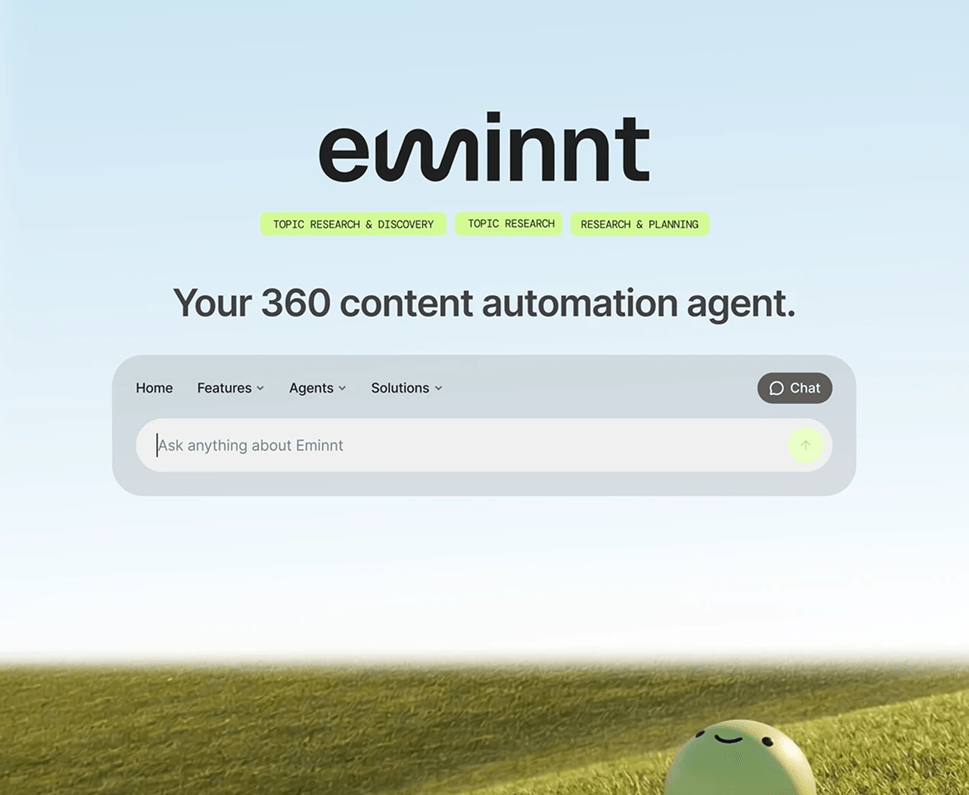
A trustworthy AI UX vendor shows one shipped feature where trust was the design problem, plus evidence the fix was validated, through usability testing or adoption and retention data where available. Our Eminnt case study is reloadux's own example: a multi-agent workflow made legible with clear handoffs, states and review gates, expert approval before anything publishes and usability testing across planning, drafting, review and publishing. If a finalist cannot produce a comparable example, move to the next name on your list.

Key Takeaways
- Score every finalist against a written rubric covering trust-pattern proof with validation evidence, an audit-first process, production-ready handoff and pilot availability before your final call.
- Ask each vendor for one shipped AI feature where trust was the design problem, with evidence the fix was validated, not a client logo wall.
- Request a fixed-scope pilot, an audit or single feature, before committing to a full redesign engagement.
- Build a dedicated line item for AI UX design into next quarter's budget now, since an undefined AI feature budget is a reasonable driver of scope creep during a vendor engagement.
- A high award count or client count shows marketing reach, not design outcomes. Require a named trust-pattern case study instead.
What Makes an AI UX Design Agency Different for Teams Retrofitting AI into a Live SaaS Product
An AI UX design agency designs for uncertainty. Traditional interfaces are deterministic: the same click produces the same result every time. AI features do not behave that way and a recommendation engine or agentic workflow can return different outputs from the same input. That variability is harder to design around when you are retrofitting AI into a product that already has users, flows and internal review habits, rather than building a new product from a blank canvas.
Retrofitting AI into a live SaaS product is a harder design problem than a new build for reasons specific to an existing product:
-
Existing users have established habits. They learned your product's current behavior and trust it to be predictable, so an AI feature that suddenly behaves probabilistically breaks an expectation you spent years building.
-
Existing flows carry UX debt. The screens an AI feature has to slot into were built for deterministic logic, so a confidence indicator or explainability panel often has nowhere clean to sit without a broader interface rework.
-
Internal teams may lack the skills to judge AI design work. Because AI outputs are probabilistic rather than fixed, product teams need new competencies in selecting the right evaluation sets to test them against (Korn Ferry, 2025). That means your internal team may not yet know how to judge whether a vendor's AI UX claims hold up on their own.
Shipping the AI feature and getting people to rely on it are separate problems too. Among employees at organizations that have implemented AI, 65% say it has improved their productivity, but only 14% strongly agree it has transformed how work gets done (Gallup, 2026). A design partner who has only shipped AI features, without closing that adoption gap, has not yet proven the feature earns trust once it is in front of real users.
You need named criteria, not a gut check, before you hire an AI UX designer. Our AI feature experience design work addresses the gap between a feature that demos well internally and one that earns trust in production.
Some generalist agencies can ship a clean dashboard but have not yet built a confidence indicator or an explainability panel that holds up when a skeptical enterprise buyer starts asking hard questions.
AI UX Design Partner Selection: The Four Criteria Scorecard
To choose a UI UX agency for AI features, score every finalist against four named criteria before you sign anything: trust-pattern proof with validation evidence, an audit-first process, production-ready handoff and pilot availability. Use the table below to run each finalist through the same four questions, then compare answers side by side rather than trusting a general impression from the pitch.
| Criterion | Question to ask the agency | Strong answer | Red flag |
|---|---|---|---|
| Trust-pattern proof with validation evidence | Show me one shipped feature where trust was the design problem. How did you validate the fix? | A named feature plus usability testing results or adoption and retention data tied directly to that feature | A client logo wall award count or general portfolio with no named trust feature |
| Audit-first process | Walk me through your process before any screen gets touched | A named methodology step such as a UX audit and AI readiness assessment followed by AI opportunity mapping | Design work starts immediately with no discovery or audit phase named |
| Production-ready handoff | What exactly do we receive at handoff and can engineering build from it directly? | Production-ready dev-handoff-ready assets confirmed in the statement of work | Prototype-stage mockups that require a second discovery phase before engineering can build |
| Pilot availability | Can we start with a fixed-scope pilot before committing to a full engagement? | A fixed-scope pilot such as an audit or single-feature redesign offered as a standard option | Only a broad open-ended retainer is offered with no smaller entry point |
Score each finalist against all four rows before your final call. A finalist who scores well on three criteria but fails trust-pattern proof has not solved the core problem regardless of the other scores, so treat that criterion as a gate rather than one input among equals. Use the remaining three scores to break ties between finalists who all clear the trust-pattern bar.
Five Questions to Ask on the Final Call Before You Sign
A scorecard tells you what to look for. These questions test whether a finalist has designed for AI uncertainty rather than described it on the pitch call.
-
What does the interface show a user when the model's confidence is low, and how did you decide that threshold?
-
Walk me through how a user corrects or overrides an AI output once it is on screen.
-
What happens in the interface when the model gets it wrong, and how does the user find out?
-
If multiple agents are working behind the scenes, how does the user see which agent did what?
-
What changed in the design after your last round of usability testing?
A strong answer names a specific pattern and a specific test result. A weak answer describes a philosophy with no artifact behind it.

AI Trust UI Design Services and What Real Explainability Looks Like
AI trust UI design services make an AI system's reasoning visible without burying the user in technical detail. A common risk is hiding the AI's logic entirely, which erodes trust the first time the system is wrong, or exposing raw model output, which overwhelms a non-technical user.
The fix sits in specific patterns. We break down five of these patterns in Why Your AI Feature Feels Random. Four of the core patterns show the user:
-
Confidence scores: how sure the model is about a given output, so the user knows when to double-check it
-
Source citations: where a claim or recommendation came from, so the user can verify it independently
-
Edit-before-accept flows: a chance to review and adjust an AI output before it takes effect
-
Clear escalation to a human: a visible path to a person when the system is unsure or the stakes are too high for automation
Multi-agent systems add another layer. If your product coordinates multiple AI agents behind the scenes, users need to see which agent did what and why, or the system reads as a black box. Ask any finalist whether they have designed observability into a multi-agent interface, and ask to see the screen where they solved it.
AI Product Design Agency Cost and What Drives It
AI product design agency cost varies primarily by engagement scope, not by agency size or award count. A common pattern worth watching for is signing a broad retainer before knowing which feature needs trust-pattern work.
| Engagement shape | Scope | Best use |
|---|---|---|
| Fixed-scope pilot | A single bounded deliverable such as an audit or one redesigned feature with a defined end date | Testing a vendor's trust-pattern thinking before any larger commitment |
| UX audit and AI readiness assessment | A review of one feature or flow to identify where AI uncertainty needs a trust pattern | Teams unsure which feature needs trust-pattern work before committing budget |
| Full AI-ready redesign | Multiple workflows redesigned together with trust patterns built in across the product | Teams with a validated pilot ready to scale trust-pattern design product-wide |
An undefined budget for AI feature work is itself a reasonable driver of scope creep, especially when teams face pressure for faster delivery without having formally allocated funds for it. PMI reports that 52% of projects experienced scope creep or uncontrolled changes to scope (PMI, 2018).
Request a fixed-scope pilot, an audit or single-feature redesign, before agreeing to anything larger. This tests the vendor's trust-pattern thinking on a small bounded piece of work and gives finance a concrete number to approve instead of an open-ended retainer.
When to Hire an AI UX Designer vs. an In-House Team
The product founder's instinct is usually to move fast: an in-house designer can mock up a feature faster than onboarding a new vendor. The design lead's concern is usually the opposite, since speed on a mockup that does not handle model uncertainty just moves the failure downstream to production.
| Situation | Who to hire |
|---|---|
| No AI-driven decision points or uncertainty in the product | An in-house designer or generalist agency |
| Users need to trust an AI output before acting on it | An AI-focused partner who has solved this problem before |
| Unsure which case applies and want to test before committing | An AI-focused partner on a small pilot to avoid committing to a full engagement |
Use the table above to decide before you hire an AI UX designer or default to whoever is fastest to onboard.
Common Failure Modes When You Hire an AI UX Designer
These four failure patterns show up often enough in AI UX vendor engagements to be worth naming, and each carries a specific consequence and prevention step.
| Failure mode | What happens | Prevention |
|---|---|---|
| The confidence-theater failure | A vendor ships a polished interface that hides model uncertainty entirely. Users trust the output blindly, then abandon the feature the first time it is wrong. | Require a confidence-signaling pattern in the contract deliverables, validated in user testing before handoff. |
| The black-box handoff | The agency delivers a prototype your engineering team cannot build from without a second discovery phase. Your launch timeline slips by a full sprint or more while engineering reverse-engineers the design intent. | Confirm production-readiness of deliverables in the statement of work before signing. |
| The scope-creep spiral | An open-ended retainer expands as AI feature work stays loosely defined and budget was never formally allocated. Costs run past the original estimate with no clear point to stop. | Start with a fixed-scope pilot, the same fix identified above for the budget mismatch. |
| The award-count substitute | A vendor leans on award counts or client volume instead of a specific trust-pattern case study. You sign based on polish, then discover mid-engagement the vendor has never validated a trust feature with real users. | Ask for one named feature where trust was the design problem and one piece of validation evidence, every time. |
How reloadux Scores Against These Criteria
Applying the four criteria above to reloadux shows the evidence behind each one.
-
Trust-pattern proof with validation evidence. The Eminnt case study shows a multi-agent workflow made legible with clear handoffs, states and review gates, expert approval before anything publishes and usability testing across planning, drafting, review and publishing. A separate client review on Clutch, from Minze Health, describes AI explanations delivered in the patient journey and explainable AI panels built into a clinician dashboard, with the client reporting fewer onboarding errors, faster clinician triage and AI features that feel safer and more trusted (Clutch, 2026).
-
Audit-first process. A client review on Clutch lists a UX audit, an AI readiness evaluation and AI opportunity mapping among the deliverables on a past engagement. The same client says some AI initiatives were postponed in favor of fixing core workflows first, so the audit changed what the engagement covered (Clutch, 2026).
-
Production-ready handoff. A separate Clutch review from Zencargo, a logistics platform client, reports that its engineers shipped the frontend with almost no layout changes, crediting the design tokens and component documentation delivered as part of the handoff (Clutch, 2026).
-
Pilot availability. Teams that want to test this before a full engagement can start with the 2-day trial on one workflow, a focused UX review of one core flow plus one or two redesigned screens.
About reloadux
reloadux is an AI-native UX and product design agency, part of the Tkxel network. It has delivered 500+ products and has 95% client retention. Our UX audit and AI readiness, AI opportunity mapping and AI feature experience design services help SaaS teams adding AI to live products design confidence indicators, explainability panels and review gates.
If your product has multi-agent or agentic complexity, our Agentic Workflow UX service page walks through the specific patterns we design for.
Conclusion
Choosing an AI UX design partner comes down to one test: can they show a shipped feature where trust was the design problem, and can they prove it was validated with real users. Award counts, client-count claims and portfolio polish are secondary evidence at best.
If your product has genuine AI uncertainty, agentic behavior or explainability gaps users are bumping into, an AI-native specialist earns its cost. If your product is a straightforward interface with no AI-driven decision points, save your budget and hire a generalist instead. If your AI feature is live but is not earning trust in production, request a 2-day trial on one workflow: a focused UX review of one core flow plus one or two redesigned screens.
FAQs

Saliha Shahzad
UI/UX Designer