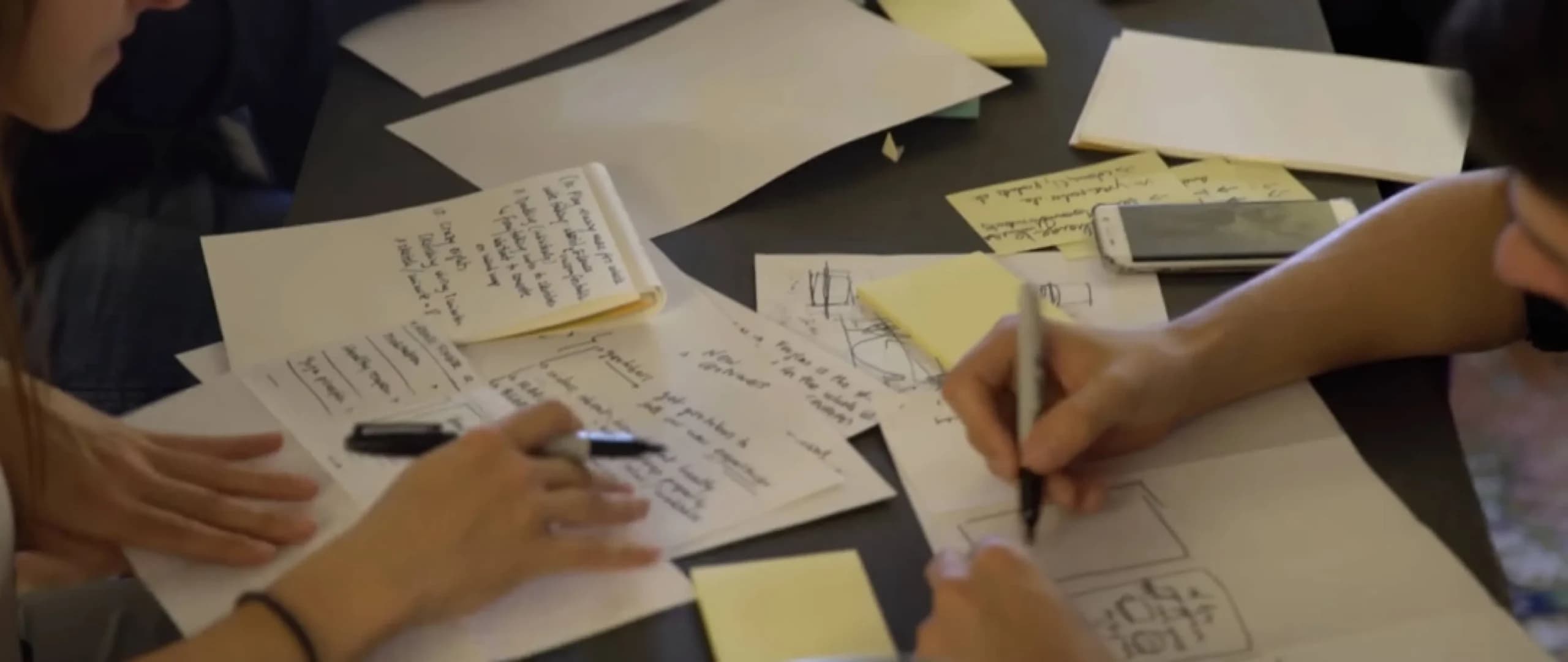
The Brief History of Design Sprint
The Design Sprint process was created by Jake Knapp in 2010. He took inspiration from many places, including the product development culture of Google, the design thinking workshops of IDEO, ideas like Getting Real from Basecamp and The Checklist from Atul Gawande, and even his own experience in building products such as Gmail and Hangouts. Between 2010-12 at Google, Jake perfected the Design Sprint for teams such as Chrome, Search, and Google X. He took Design Sprints to Google Ventures in 2012, where the rest of the team chipped to improve the process with their skills.
To further perfect the process, more individuals like Braden Kowitz added story-centered design – a user-focused approach rather than features or technologies. Similarly, Michael Margolis has taken customer research — which can usually take weeks to plan and often deliver confusing results— and has found a way to achieve crystal-clear results in just one day. John Zeratsky focused on measuring outcomes with each company’s key metrics. Last but not least, Daniel Burka brought first-hand expertise as an entrepreneur to ensure every step made sense for startups.

How it Works
So let’s break down the process:
On Monday, you make a guide of the issue. On Tuesday, each individual sketches a solution. On Wednesday, you choose which sketches are most grounded. On Thursday, you assemble a practical model. On Friday, you then test that model keeping in mind the client’s objectives.
But before the sprint begins, you have to do some sufficient prep. Not only do you need to have a challenge that actually justifies five days’ worth of focused work, but you also have to simultaneously recruit a team with diverse skills to undertake and solve that very challenge.

Map it Out
Day 1 is a series of structured conversations to build a foundation and a focus for the sprint week. The structure allows the team to “boot up” as much information as quickly as possible while preventing the usual meandering conversations.
In the morning, you’ll define key questions and a long-term goal. Next, you’ll make a simple map of your product or service. In the afternoon, you’ll ask the experts on your team to share what they know. Finally, you’ll pick a target: the moment on the map that represents the greatest risk and opportunity.
Sketch

Day 2 is all about solving the problem, using a method optimized for deep thinking. Instead of a typical group brainstorming session, every
Individuals will sketch their own detailed, opinionated solutions, following a four-step process that emphasizes critical thinking over artistry.This helps bring in more ideas to turn into a testable hypothesis. This stage helps to prioritize user needs and helps you visualize the customer journey from start to finish with your product or service.
Decide
Day 3, you and your team will have a stack of solutions after having carried out the empathy mapping and customer journey sketching. Now, you have to decide which of those sketches should be prototyped and tested. Remember the end goal is that your product or service resonates with the user.
Prototype

Day 4, you’ll build a realistic prototype of the solutions in your storyboard so you can simulate a finished product for your customers. Design Sprint prototyping is all about a “fake it till you make it” philosophy.
Test
It’s time to put that prototype to the test! On day 5, you’ll show your prototype to a couple of people, with separate 1:1 interviews. Instead of waiting for a launch to get perfect data, you’ll have quick-and-dirty answers to your most pressing questions right away.
UX Design Sprint Essentials
Embarking on a successful design journey involves harnessing the power of the UX Design Sprint process. This structured approach, comprising distinct design sprint steps, including the product design sprint process and UX design sprints, ensures a streamlined and effective path from ideation to execution. Central to this process is the pivotal “What is design sprint brief” phase, where teams define objectives and set the stage for innovation. Rooted in methodologies such as the Google Design Sprint, the UX sprint process is designed to foster collaboration and creative problem-solving. By integrating key elements of sprint UX design, teams can expedite the development of user-centric solutions, resulting in winning designs that resonate with users and meet project goals.
So, Why do you need a Design Sprint?
To sum up, the design sprint helps you know the design process inside out. You are not only relying on your team’s strength as a whole but are also empowering every member to think creatively and to be active contributors to the product’s success.
Moreover, by having a clear thought-out process, resource optimization is achieved and the progress can also be easily tracked. Ultimately, this 5-day process enables relevant insights, consumer profiles, and potential problems and challenges to be gathered from which a unified understanding and idea generation takes place across all members so that the ideal product-market fit is achieved.


Ahmad Ullah
Principal UX Designer